
I found three bags of spinach in my fridge once. Three. Two were already liquid by the time I noticed them shoved behind a jar of pickles. I’d bought spinach every week for almost a month because I kept forgetting I already had some, and every single bag ended up in the trash instead of a meal.
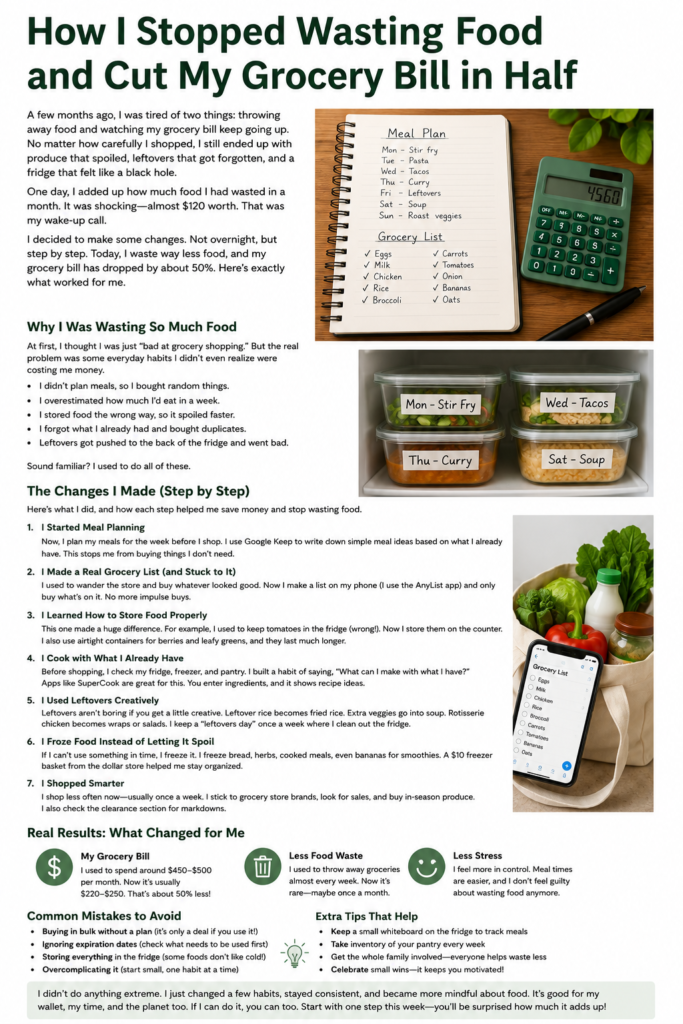
That was the moment I actually sat down and looked at how much money I was throwing away every week. It was bad. Like, embarrassing-if-I-told-you-the-number bad.
I started tracking everything for one month, just to see the damage. Then I changed how I shopped, cooked, and stored food, and within two months my grocery bill had dropped by almost half. Not by eating less or buying cheaper junk, just by wasting way less of what I already paid for.
Here’s exactly what I changed.
The Real Problem Wasn’t My Grocery Bill — It Was My Trash Can
I used to think the way to save money on groceries was to find better deals. Coupons, sales, generic brands. That stuff helps a little, sure. But it completely misses the bigger issue, which is that most of us throw out a surprising amount of the food we buy without ever eating it.
I didn’t believe that applied to me until I actually checked. For one week, I kept every piece of food packaging and every spoiled item on the kitchen counter instead of tossing it right away, just to see it pile up. It was genuinely uncomfortable to look at by Friday. Bread heels, half a rotisserie chicken, wilted lettuce, yogurt past its date that I never got around to eating.
That visual changed how seriously I took this.
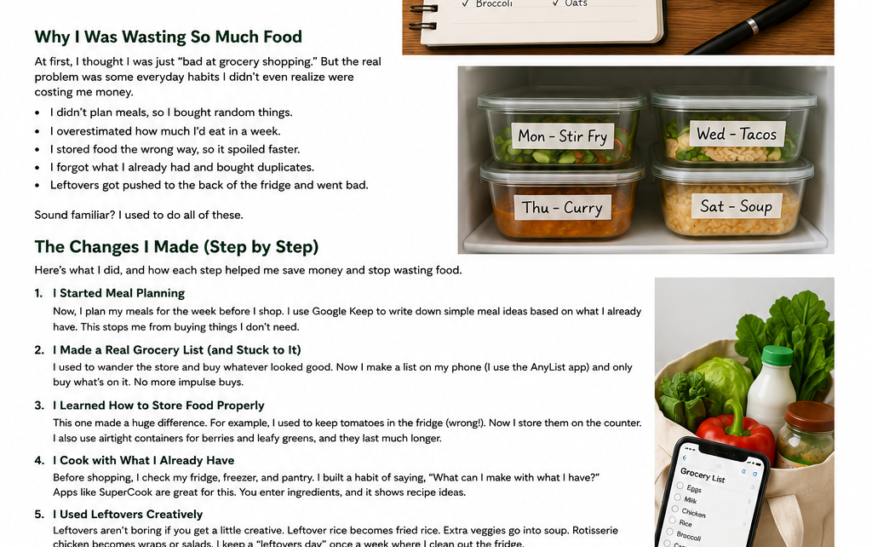
Step 1: I Started Doing a “Fridge Inventory” Before Every Shopping Trip
This sounds tedious but it takes maybe three minutes. Before I make a grocery list now, I open the fridge, freezer, and pantry and actually look at what’s already there. Not a deep clean, just a quick scan.
The spinach disaster happened because I never did this. I’d see an empty space in my mental picture of the fridge and assume I needed to buy more of something, when really it was just buried behind something else.
Now my rule is simple: no grocery list gets written until I’ve looked at what I already own. Half the time I realize I have ingredients for two or three meals already sitting there, which means I need way less than I thought.
Step 2: Meal Planning, But the Lazy Version
I tried full-on meal planning before — the kind where you plan breakfast, lunch, and dinner for seven days, with recipes and exact ingredient lists. I lasted about ten days before I gave up. It was too rigid for my actual life.
What works instead is what I call loose planning. I pick five dinners for the week, not seven, because life happens and we end up eating out or having leftovers at least twice anyway. Then I build my grocery list around just those five meals, plus basic staples.
I use the Notes app on my phone for this now, nothing fancy. Some people like apps like Mealime or Paprika for organizing recipes and auto-generating shopping lists, and those work well if you want something more structured. I just never stuck with the app versions long-term, so plain notes works better for my brain.
Step 3: I Shop With a List and I Actually Follow It
This one seems obvious but I wasn’t doing it. I’d write a list and then wander the store buying extra stuff that “looked good,” which is exactly how I’d end up with three bags of spinach and zero plan for any of them.
Now I genuinely stick to the list, with maybe one or two flexible spots for produce that’s on sale. If I see something tempting that’s not on the list, I ask myself a simple question: what meal is this going into, specifically? If I can’t answer that in five seconds, it stays on the shelf.
Step 4: I Learned to Store Food Properly, Which Sounds Boring But Made a Huge Difference
Honestly, I think bad storage was responsible for at least a third of my waste. I was just shoving things in the fridge wherever they fit.
A few changes that actually mattered:
- Herbs last way longer in a glass of water in the fridge, like a little bouquet, instead of wrapped in their original bag
- Berries last longer if you rinse them in a mix of water and a splash of vinegar, then dry them well before storing — kills mold spores that cause that fast fuzzy rot
- I started using clear storage containers instead of opaque ones, because “out of sight, out of mind” is real and I was forgetting what I had
- Bread goes in the freezer if I won’t finish it in three or four days, not left on the counter to go stale or moldy
None of this is complicated. I just never bothered learning it before.
Step 5: Leftovers Get a Real Spot in the Plan, Not an Afterthought
I used to make leftovers and then just hope I’d remember to eat them. I rarely did. Now I actually schedule one night a week as a “leftover night” where whatever’s in containers from earlier in the week gets eaten instead of cooking something new.
This single habit cut down a huge amount of waste because it gave leftovers an actual purpose instead of letting them quietly expire in the back of the fridge.
Step 6: I Started Freezing Things I Used to Throw Away
Vegetable scraps, like onion ends, carrot peels, and celery tops, go into a bag in my freezer now instead of the trash. Once it’s full, I dump it all in a pot with water and make vegetable stock. Costs nothing, takes almost no effort, and I used to just buy stock at the store every time.
Same with bones from chicken or other meat — into the freezer until I have enough for a batch of broth.
Bananas going brown get peeled and frozen for smoothies instead of tossed. Bread that’s going stale gets turned into breadcrumbs or croutons.
None of these were things I thought about before. They felt like extra effort, until I realized the effort was maybe five minutes and it was saving real money every week.
A Real Example From My Own Kitchen
One week I bought a rotisserie chicken for dinner. Old me would’ve eaten the breast meat that first night and let the rest sit until it got tossed a week later.
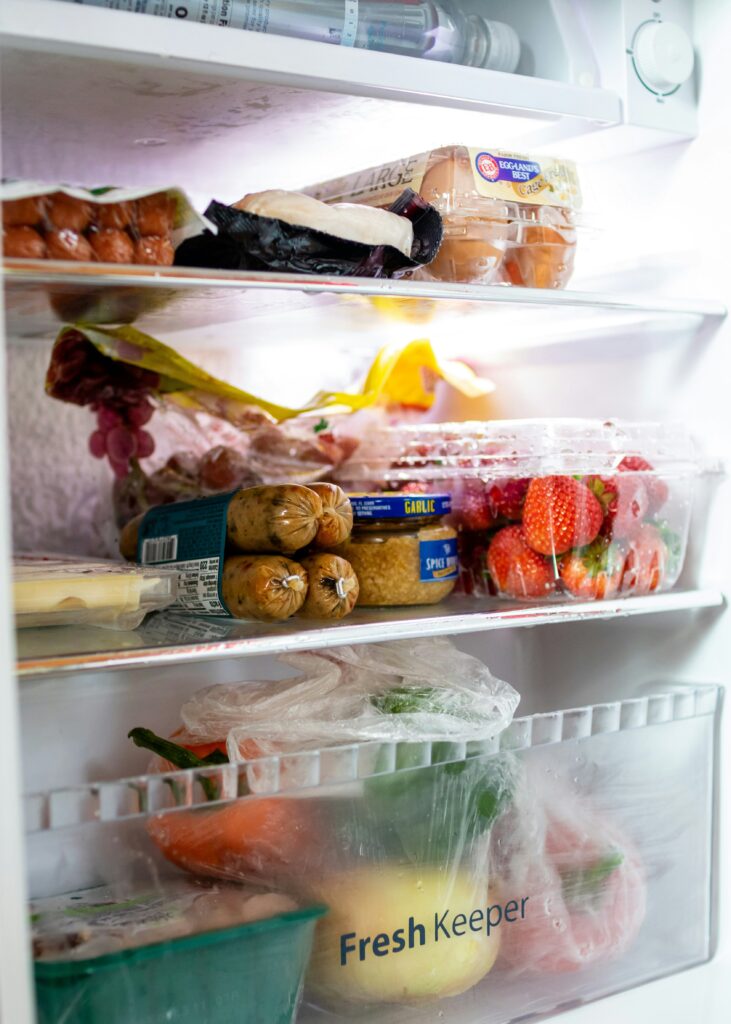
New me used it across three meals: chicken and rice the first night, chicken tacos the next day with the leftover meat, and then the carcass went straight into a pot for broth, which I used later for soup. One chicken, three meals, almost zero waste. That single shift alone probably saves me ten to fifteen dollars a week just from not re-buying proteins I technically already had.
Common Mistakes I Made (So You Can Skip Them)
Buying in bulk for things I don’t actually use often. Bulk only saves money if you use it before it spoils. I had bulk spices and oils go rancid because they sat unused for a year.
Shopping hungry. Classic mistake, completely true. Everything looks appealing and the list goes out the window.
Not checking the freezer before buying meat. I once bought chicken breasts only to find an identical pack already in the freezer from two weeks earlier.
Treating expiration dates as strict deadlines. A lot of “best by” dates are about quality, not safety. I used to toss things the day they “expired” without even checking if they were actually bad. Now I use my senses — smell, texture, appearance — instead of just the printed date for most non-meat items.
Final Thoughts
I didn’t cut my grocery bill in half by buying worse food or eating less. I did it by actually using what I already paid for instead of letting it rot in the back of the fridge. The spinach thing seems silly looking back, but it was honestly the wake-up call I needed.
If you want to try this yourself, don’t overhaul everything at once. Pick one thing — maybe the fridge inventory before shopping, or freezing your scraps for stock — and just do that for a couple weeks. The savings add up faster than you’d expect, and it genuinely doesn’t take much extra time once it becomes a habit.
How to Keep Long-Distance Family Relationships Strong and Meaningful
My dad texted me a photo of a deer in his backyard last winter. Just that, no caption, nothing else. I almost didn’t bother replying since it seemed so random, but something made me text back “nice, did it eat your tomatoes again,” and somehow we ended up going back and forth for twenty minutes about nothing in particular.

That random deer photo did more for our relationship than the obligatory “how’s everything” call we’d had two weeks earlier.
I moved away from my hometown almost six years ago, and for the first year or so I genuinely thought I had this whole distance thing figured out. We talked. We checked in. But looking back, those check-ins were pretty thin. Surface-level. The kind of conversation you’d have with a coworker, not your own father.
It took me a while to figure out why the relationship felt like it was fading even though we were “in touch.” Once I figured it out, I changed how I approached staying close to my family, and the difference has been pretty dramatic. Here’s what actually moved the needle.
Being “In Touch” Isn’t the Same as Being Close
This is the trap I fell into for a long time. I’d talk to my parents every week or two, ask how things were, share a quick update on my end, and consider that mission accomplished.
But staying in touch and staying close aren’t the same thing. You can technically talk to someone regularly and still feel like you’re drifting, because the conversations never go anywhere deep. It’s all surface, the weather, work, weekend plans, and none of it actually builds the kind of closeness you had when you lived down the hall from each other.
Once I noticed that pattern, I stopped measuring closeness by how often we talked and started paying attention to what we actually talked about.
Step 1: Make the Conversations Less Like Interviews
Early on, my calls home followed the same script every time. “How’s work?” “Good, busy.” “How’s the weather?” “Cold.” It wasn’t anyone’s fault, it’s just what happens when a call becomes routine.
What helped was bringing something specific to talk about instead of opening with a generic question. Instead of “how are you,” I’ll bring up something like “did you end up fixing that fence” or “how’d the doctor’s appointment go,” referencing something they mentioned last time. It signals I actually remembered, and it gives the conversation somewhere to go instead of stalling out after two minutes.
I also started just narrating small parts of my actual day instead of waiting to be asked something first. “I tried this new recipe and it was a disaster” makes for a way more interesting opener than “nothing much going on here,” and it usually leads somewhere good.
Step 2: Build in Communication That Isn’t a Scheduled Call
For years, our entire connection ran through phone calls, and only phone calls. The problem with that is calls require both people to be free at the same time, in the mood to talk, and ready to sustain a conversation. That’s a lot of conditions to line up regularly.
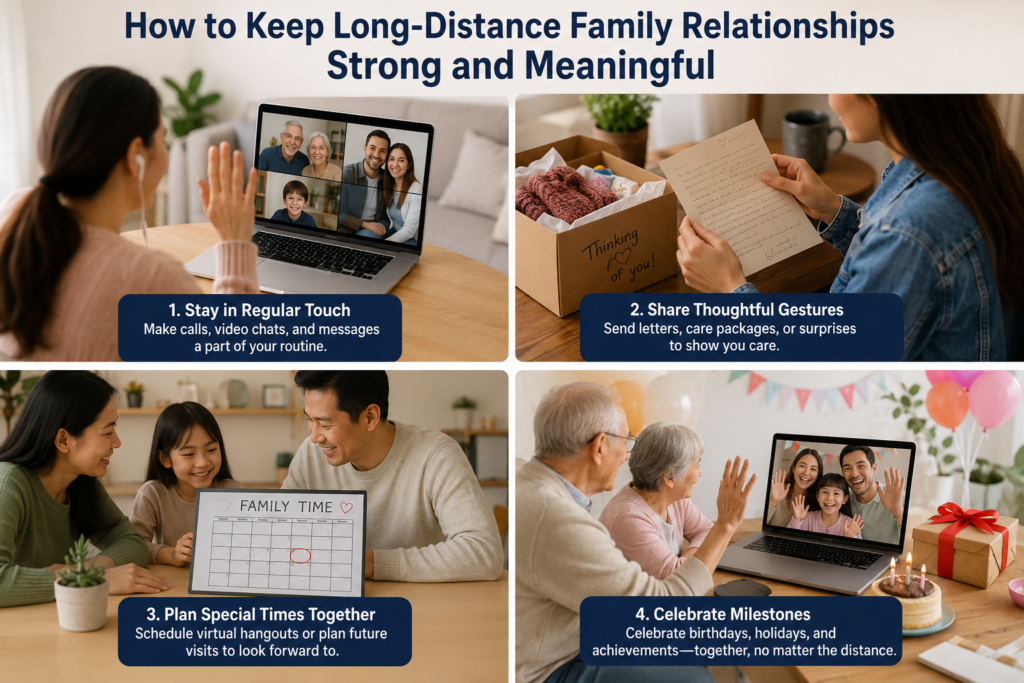
Once we added other channels, things loosened up a lot. A family group chat on WhatsApp now carries random updates, photos, and dumb jokes throughout the week, with no pressure to respond right away. Voice notes work well for when I want to share something but don’t have the energy for a full call, so my mom and I send these back and forth through the regular Messages app on iPhone. We also started a shared Google Photos album that the whole family adds to, so everyone sees the small moments, not just the big announcements. And honestly, just texting like normal helps too, the way you’d text a friend, not only for logistics like “call me back” or “what time’s dinner,” but for actual little updates.
The deer photo from my dad came through that group chat. It wouldn’t have happened on a scheduled call because it wasn’t “news,” it was just a moment he wanted to share.
Step 3: Plan Visits With Actual Intention
For the first couple years, visits home happened whenever they happened, usually just around Christmas, and that was it. One visit a year isn’t really enough to maintain closeness, especially with parents who are getting older and siblings whose lives are changing.
What changed things was treating visits as something to actively plan for, not something that occurs passively. A few specifics that helped:
- Book flights early, even three or four months out, because committing financially makes the trip real instead of a maybe.
- Pick a second trip outside the holidays, even a short one. I started doing a long weekend in early summer just because, no occasion needed.
- Tell family the actual dates as soon as you know them, so they can plan around it too instead of finding out a week before.
- Resist cramming the whole trip with errands and other obligations. I used to treat visits home as a chance to see ten different people and run errands I’d been putting off, which left almost no real time with my actual parents.
That last one was a big shift. Now when I visit, I block out real, unhurried time with my parents specifically, even if it means seeing fewer other people.
Step 4: Pay Attention to the Details They Mention in Passing
I noticed something a while back. My mom would mention small things during our calls, like a friend going through a rough patch or some minor work stress, and I’d nod along and then completely forget about it by the next call.
Now I jot these things down right after we talk. Nothing elaborate, just a quick note in my phone. Then next time we talk, I’ll ask about it specifically. “Did things get better with your coworker” lands completely differently than “how’s work,” because it shows I was actually listening, not just present on the call.
This sounds small, but it’s probably the single change that’s made the biggest difference in how connected my parents say they feel, especially my mom, who’s mentioned more than once how much it means that I “actually remember stuff.”
Step 5: Let Them See the Unremarkable Parts of Your Life Too
I used to only share the highlight-reel stuff with my family, a promotion, a trip, something worth announcing. Looking back, that meant my parents only got these occasional big updates, with long stretches of silence about everything in between.
Now I’ll send a photo of something completely mundane, my lunch, a weird bug on my windowsill, nothing important. It’s not information they need, but it makes them feel like they’re part of my actual daily life instead of getting quarterly press releases about it.
It works the same in reverse. When my dad sends that deer photo, or my mom sends a picture of something she’s reading, it tells me what an ordinary Tuesday looks like for them, which honestly means more to me than the big updates do.
A Real Look at How We Stay Connected Now
My parents are about nine hours away by car, and here’s the actual setup that’s replaced the old once-every-two-weeks phone call habit. There’s a running WhatsApp group chat that’s active most days with photos, random thoughts, and the occasional meme. We have a proper phone call roughly once a week, but with actual things to talk about instead of small talk. Voice notes fill in when timing doesn’t line up for a call. We do two planned visits a year, booked months in advance, plus a spontaneous third one when schedules allow. And that shared photo album has become this ongoing, low-pressure window into each other’s everyday life.
The phone calls used to feel like an obligation. Now they’re honestly something I look forward to, mostly because there’s always something specific to actually talk about.
Common Mistakes to Avoid
Treating frequency as the whole goal is an easy trap. Talking often doesn’t automatically mean staying close, if the conversations never go beyond small talk.
Only calling when there’s a real update turns every conversation into a status report instead of an actual relationship.
Letting visits stay vague until the last minute rarely works out. “We’ll figure out a trip sometime” rarely turns into an actual trip. Specific dates, booked early, make it real.
Overpacking visits with errands and other people can backfire too. A jam-packed trip home can leave you feeling like you saw everyone and connected with no one, including your own parents.
Assuming older family members will switch to your preferred app usually doesn’t pan out. My grandfather still doesn’t text much, so a regular phone call works far better for him than trying to pull him into a group chat he’ll never check.
Final Thoughts
Distance changes a relationship whether you want it to or not, but it doesn’t have to weaken it. What actually keeps a family close isn’t proximity, it’s the small, repeated effort of staying genuinely curious about each other’s ordinary days, not just the big milestones.
None of what I changed required much money or anything complicated. A group chat, a few intentional questions, visits booked early instead of left vague. The effort adds up faster than you’d expect, and it’s a lot easier to keep up once it actually becomes a habit instead of something you mean to get around to.