
Three summers ago, I got stuck in a tiny fishing village in Portugal because I missed the last bus out. There was no cell signal and no backup plan. It was just me, a backpack, and a handful of confused locals pointing me toward the only guesthouse in town. That accidental night in Nazaré turned into one of the best travel memories I have.
Funny enough, I never would have found that place on purpose. It wasn’t on any of the usual “top destinations” lists. The whole thing showed up because a plan fell apart. Somehow that mistake led to something better than anything I had actually booked.
That experience changed how I travel. Now I actively hunt for the places nobody talks about. These are spots that don’t show up on the front page of travel blogs or get flooded with the same five Instagram poses. This list is the result of years chasing that feeling. It’s mixed with places friends swore me to secrecy about before finally letting me share them.
Why Hidden Places Hit Different
Popular destinations earn their fame for good reason, but something happens once a place gets famous enough. Crowds show up. Prices climb. The experience starts feeling manufactured, almost like walking through a theme park version of the real thing.
Hidden spots skip all that. You get to experience a place close to how it actually exists day to day. There’s no wall of tour buses parked outside blocking the view.
There’s also a selfish reason I love finding these places. Nobody has already told me exactly what to feel or where to stand for the best photo. I get to figure it out myself. That process alone makes the whole trip feel more personal.
A friend once told me she almost skipped a trip to a small Slovenian village because it had zero reviews online. She went anyway on a whim. That trip ended up being the best three days of her entire European vacation. The reason came down to one simple thing: nothing about it had been pre-packaged for tourists.
How I Actually Find These Places
People assume I have some secret travel database. I don’t. What I do have is a system that consistently turns up spots most guidebooks skip entirely.
Local subreddits for specific countries or regions have been my best source by far. Real residents post honest opinions there, including complaints about tourist traps. That alone tells you a lot about where locals actually spend their weekends.
Google Maps also hides a trick a lot of people miss. Zoom into a rural area and look for clusters of reviews written in the local language rather than English. That pattern usually signals a spot tourists haven’t discovered yet.
Talking to hotel staff once you’ve already arrived somewhere works better than any app. A front desk worker at a hostel in Slovenia once drew me a hand-sketched map to a lake. It wasn’t listed on any official tourist site. That map led to the highlight of that entire trip.
Facebook groups dedicated to specific regions also deliver surprisingly good results. Expats living abroad tend to post honest, unfiltered opinions about where they actually spend their free time. Those opinions sit far removed from anything a tourism board would ever promote.
20 Hidden Destinations Worth Chasing
1. Nazaré, Portugal
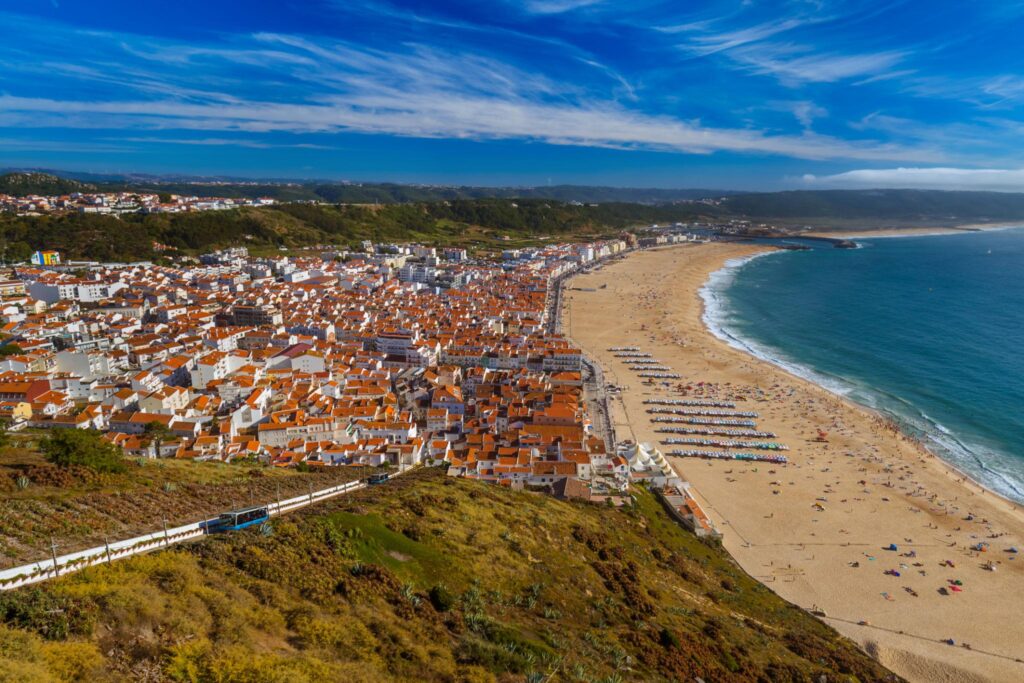
This fishing town sits below giant cliffs and gets famous surfers chasing record-breaking waves. Regular travelers, though, somehow still overlook it entirely. Fresh grilled sardines from a beachfront stall cost almost nothing. They taste better than anything I’ve had in a fancy restaurant.
The funicular ride up to the lighthouse viewpoint takes just a few minutes. It offers one of the best coastal views in Portugal.
2. Lake Bled’s Quieter Neighbor, Lake Bohinj, Slovenia
Everyone visits Lake Bled. Almost nobody drives the extra thirty minutes to Bohinj. That extra distance somehow rewards you with even more dramatic mountain views and far fewer crowds clogging the shoreline.
Renting a rowboat here costs a fraction of what similar activities cost at Bled, and the water stays noticeably calmer.
3. Hallstatt’s Alternative, Gosau, Austria
Hallstatt gets swarmed by tour buses now, largely thanks to social media. Gosau sits nearby with nearly identical mountain views and a fraction of the visitors.
4. Kotor, Montenegro
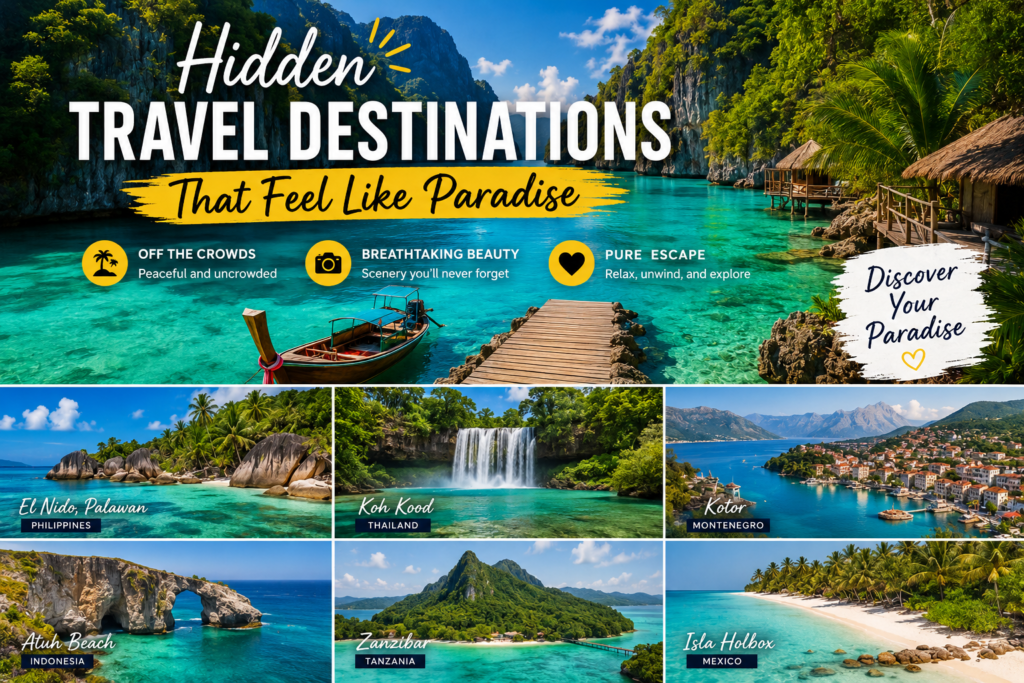
Tucked inside a dramatic fjord-like bay, Kotor’s old town feels medieval in the best way. Climbing the fortress walls above the city rewards you with a sweeping view. It genuinely puts the Dubrovnik crowds to shame, minus the crowds themselves.
Cats roam freely throughout the old town. A small museum dedicated to them even sits tucked inside one of the alleys.
5. Matera, Italy
An ancient cave city carved directly into limestone cliffs, Matera somehow avoided the typical Italy tourist circuit for decades. Staying overnight in a converted cave hotel felt like stepping into a different era entirely.
Walking the cave city at night, once the day-trip crowds clear out, might be the single most atmospheric experience on this entire list. Few places manage to feel that ancient and that alive at the same time.
6. Raja Ampat, Indonesia
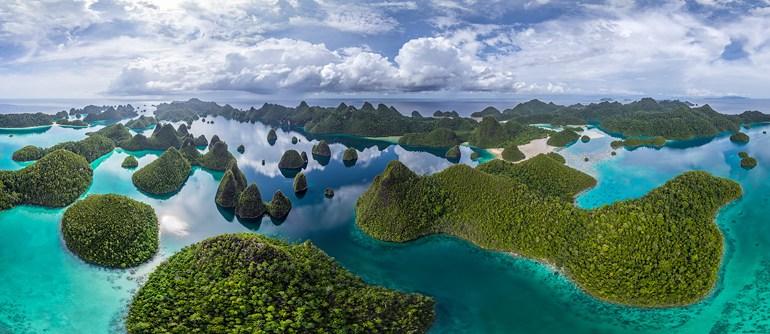
Ask any serious diver where the best untouched reefs still exist, and Raja Ampat comes up constantly. Getting there takes real effort through multiple flights and boat transfers, which keeps it wonderfully uncrowded.
7. Faroe Islands’ Village of Gásadalur
A single waterfall drops directly into the ocean next to a village of eighteen people. The hike to the viewpoint takes under an hour, yet almost nobody outside serious travel circles knows this spot exists.
8. Colmar, France
While everyone floods Paris, Colmar quietly offers fairytale half-timbered houses along canals without the crushing crowds. Renting a bike here and just wandering beats any guided tour.
9. Zhangye Danxia Landform, China
Rainbow-colored rock formations stretch across this park, created by mineral deposits over millions of years. Photos genuinely don’t capture how surreal the colors look in person.
10. Ilha Grande, Brazil
No cars are allowed on this island off the coast of Rio. That single rule keeps the whole place feeling untouched despite being a short ferry ride from a major city. Trails cut through jungle straight to some of the cleanest beaches I’ve ever swum at.
11. Krabi’s Lesser-Known Bay, Railay Beach, Thailand
Limestone cliffs block any road access here, so boats are the only way in. Somehow Railay still flies under the radar compared to Phuket or Koh Phi Phi. Rock climbers flock here for good reason, though you don’t need to climb to enjoy the scenery.
12. Cinque Terre’s Quiet Sixth Village, Tellaro, Italy
The famous five villages get packed during summer. Tellaro, technically outside the national park boundary, offers nearly the same colorful cliffside charm with almost none of the tourist crush.
13. Sapa, Vietnam
Terraced rice fields cascade down mountainsides here, and staying overnight with a local family through a homestay gives you a version of Vietnam most tourists never see. Trekking through the fog-covered hills felt like walking through a painting.
14. Antelope Valley’s Secret Neighbor, Carrizo Plain, California
While everyone floods Antelope Valley for the poppy super bloom, Carrizo Plain quietly offers similar wildflower displays with almost nobody else around during peak season.
15. Meteora, Greece
Monasteries perched impossibly atop towering rock pillars create one of the most surreal skylines I’ve ever witnessed. Most visitors rush through on a day trip from Athens, but staying overnight nearby lets you catch sunrise without the tour bus traffic.
16. Lençóis Maranhenses, Brazil
White sand dunes stretch for miles, filled with rainwater lagoons that turn a bright, startling blue during rainy season. It looks like a desert and a beach had a strange, beautiful collision.
17. Ninh Binh, Vietnam
Often called the “Halong Bay on land,” limestone karsts rise from rice paddies here instead of ocean water. A rowboat ride through Tam Coc gives you the same jaw-dropping scenery as Halong Bay for a fraction of the visitors and cost.
18. Faroe-Style Fjords Without the Crowds, Senja, Norway
While tourists cluster around Lofoten, Senja sits just south with nearly identical dramatic peaks and fjords, minus the packed parking lots and tour buses.
19. Chefchaouen’s Quieter Cousin, Fez’s Blue Gate District, Morocco
Everyone photographs Chefchaouen’s blue streets. Fez has its own quieter pockets of blue-painted alleys tucked within the old medina, alongside a maze of markets that feels far more authentic and far less staged.
20. Huacachina, Peru
A tiny oasis town wrapped entirely around a natural lagoon, surrounded by massive sand dunes. Sandboarding down the dunes at sunset became one of those unexpectedly perfect travel afternoons I still think about.
Step-by-Step Guide to Finding Your Own Hidden Gem
Finding a hidden destination doesn’t require luck. A repeatable process gets you there most of the time.
Step one: pick a popular destination you already want to visit. Every famous spot has quieter alternatives nearby, usually within an hour or two of driving distance.
Step two: search that region plus words like “local favorite” or “underrated.” Reddit threads and regional Facebook groups tend to surface honest opinions that official tourism sites won’t mention.
Step three: check Google Maps reviews written in the local language. A translation button handles the language barrier, and foreign-language reviews often reveal spots tourists haven’t flooded yet.
Step four: ask locals once you land, not before. Hotel staff, taxi drivers, and small restaurant owners usually know exactly where to send you, especially if you ask specifically for something “off the tourist path.”
Step five: build in flexible time. Rigid itineraries leave no room for spontaneous detours, and some of the best discoveries happen precisely because a schedule left a gap.
Real Examples From My Own Trips
A friend and I planned a rigid ten-day Italy itinerary years ago, hitting only Rome, Florence, and Venice. Then a missed train connection stranded us in Matera for an unplanned overnight stay. That accidental detour became the single best part of the entire trip, and we still talk about it years later.
Another trip through Vietnam had Halong Bay circled as the main event. A local guide mentioned Ninh Binh almost as an afterthought, describing it as “the same thing, but calmer.” That offhand comment led to one of the most peaceful mornings I’ve ever spent traveling, gliding through limestone karsts in near silence.
A solo traveler I met at a hostel in Athens told a similar story about Meteora. She had budgeted only a single day for the monasteries as part of a rushed group tour. A last-minute change let her stay overnight instead, and watching sunrise light hit the cliffs without another tour bus in sight became the moment she still describes as the best of her entire trip through Greece.
A coworker who backpacked through the Balkans skipped Dubrovnik entirely after hearing about the summer crowds. She chose Kotor instead, based purely on a recommendation from a hostel owner in Croatia. That single choice, she still says, turned out to be the best decision of the entire trip.
Common Mistakes to Avoid When Chasing Hidden Spots
Rushing through a hidden destination just to check it off a list defeats the entire purpose. These places reward slowing down, not speed-running through for a quick photo.
Assuming every hidden spot has the same infrastructure as major cities causes real problems. Some of these locations have limited ATMs, spotty WiFi, or restricted operating hours for restaurants and shops. Planning ahead with cash on hand and offline maps downloaded through apps like Maps.me prevents unnecessary stress.
Oversharing a location’s exact details on public social media accounts can accidentally turn a quiet spot into an overcrowded one within a year or two. A little discretion helps these places stay special longer, both for you and for the locals who live there.
Ignoring transportation logistics trips up a lot of travelers. Hidden places often sit outside major transit routes, so renting a car or hiring a local driver through a platform like GetYourGuide or a trusted local operator saves serious time and frustration.
Skipping travel insurance for remote destinations is another common oversight. Medical facilities or emergency services can be limited in isolated areas, and a policy through a provider like World Nomads or SafetyWing covers situations a regular travel credit card often won’t.
I made this exact mistake on a trip through rural Vietnam. A minor motorbike scrape needed stitches, and the nearest clinic sat over an hour away with no card reader on site. Cash and a working translation app got me through it, but a little pre-trip research would have saved a fair amount of stress that afternoon.
What to Pack for Off-the-Beaten-Path Travel
Packing for hidden destinations looks a little different than packing for a major city trip.
A portable power bank matters more here than almost anywhere else, since charging stations aren’t always guaranteed in smaller towns. Anker makes reliable options that have survived multiple international trips without issue.
Offline translation apps like Google Translate, downloaded with the local language pack beforehand, solve a lot of communication gaps in areas where English isn’t widely spoken.
A basic first aid kit becomes more important the further you get from major medical facilities. Cuts, bug bites, or minor stomach issues happen more often than you’d expect once you’re off the typical tourist path.
Cash in the local currency matters far more in remote areas than in cities. Card readers and ATMs simply aren’t guaranteed everywhere, and small family-run guesthouses often only accept cash.
A lightweight rain jacket earns its spot in any bag headed toward these kinds of destinations too. Weather in remote or mountainous areas shifts fast, and shelter isn’t always nearby when it does. Packing layers instead of one heavy coat gives more flexibility across sudden temperature swings, especially in places like Sapa or the Faroe Islands where conditions change within the same afternoon.
Budgeting for These Kinds of Trips
Hidden destinations often cost less than their famous counterparts, which surprises a lot of first-time visitors.
Accommodation in smaller towns runs noticeably cheaper than major tourist hubs. A guesthouse in Ninh Binh, for example, cost me less than a third of what a similar room would run in central Hanoi during peak season.
Food follows the same pattern. Local, family-run restaurants in places like Nazaré or Matera charge a fraction of what tourist-district restaurants in bigger cities charge for comparable meals.
Transportation sometimes costs more, though, since hidden spots often require renting a car or hiring private transport instead of relying on cheap public buses or trains. Factoring that extra cost into your budget ahead of time prevents any unpleasant surprises.
Entrance fees, where they exist at all, also tend to run cheaper at hidden destinations. Meteora’s monasteries, for instance, charge a small entry fee compared to what a similarly impressive site might charge in a heavily touristed country. That saved money adds up quickly across a multi-stop trip.
Best Time of Year to Visit These Spots
Timing matters even more with hidden destinations, since limited infrastructure can make bad weather a bigger problem than it would be in a major city.
Shoulder season, roughly the month right before or after peak summer, tends to offer the sweet spot of good weather and thin crowds. Matera and Kotor both felt noticeably calmer visiting in late May compared to accounts from friends who went in August.
Southeast Asian spots like Sapa and Ninh Binh get considerably more pleasant outside the summer monsoon months. Checking a regional weather pattern chart before booking flights saves a lot of frustration once you’re already there.
Northern destinations like Senja or the Faroe Islands reward summer visits with nearly endless daylight, while winter trips offer a real shot at the northern lights. Neither season is wrong, just different experiences entirely.
Frequently Asked Questions
Are hidden travel destinations safe to visit?
Most of these places are just as safe as their popular counterparts, sometimes safer since they see less petty tourist-targeted crime. Standard travel precautions still apply, including researching current safety advisories before booking. Registering your trip with your embassy’s travel program, where available, adds an extra layer of peace of mind for more remote itineraries.
Is it harder to communicate in these locations?
Language barriers can be more common in smaller towns compared to major tourist cities where English is widely spoken. A translation app and a little patience usually solve most communication hurdles.
Do hidden destinations require more planning than popular ones?
Slightly more, mainly around transportation and accommodation availability, since fewer options exist. Booking a few days ahead instead of same-day usually solves most availability issues.
Will these places stay “hidden” for long?
Some will, some won’t. Social media has accelerated how quickly quiet spots turn into crowded ones, which is part of why visiting sooner rather than later tends to give you the best version of the experience.
Final Thoughts
Chasing hidden destinations changed the entire way I travel. Instead of checking famous landmarks off a list, I started looking for the version of a place that still feels lived-in and real.
None of these spots require insider connections or luck most people don’t have. A little research, a willingness to drive an extra hour past the obvious tourist stop, and some patience get you most of the way there.
Every trip on this list taught me something slightly different. Nazaré taught me that missed plans sometimes lead somewhere better. Matera taught me that patience at night reveals things a rushed day trip never will. Kotor taught me that a single recommendation from a stranger can outshine an entire guidebook.
The next time a trip gets planned, consider skipping the destination everyone already knows about. Somewhere nearby, a quieter version of that same magic is probably waiting, minus the crowds and minus the price tag that usually comes with fame. That missed bus in Portugal turned out to be one of the better things that ever happened to , and there’s a good chance a similar detour is waiting on your next trip too.