

My manager once asked our whole team a question during a leadership offsite. “Name a historical leader you admire, and explain why.” I froze. My mouth blurted out “Abraham Lincoln” because his face happened to sit on the penny in my pocket at that exact moment.
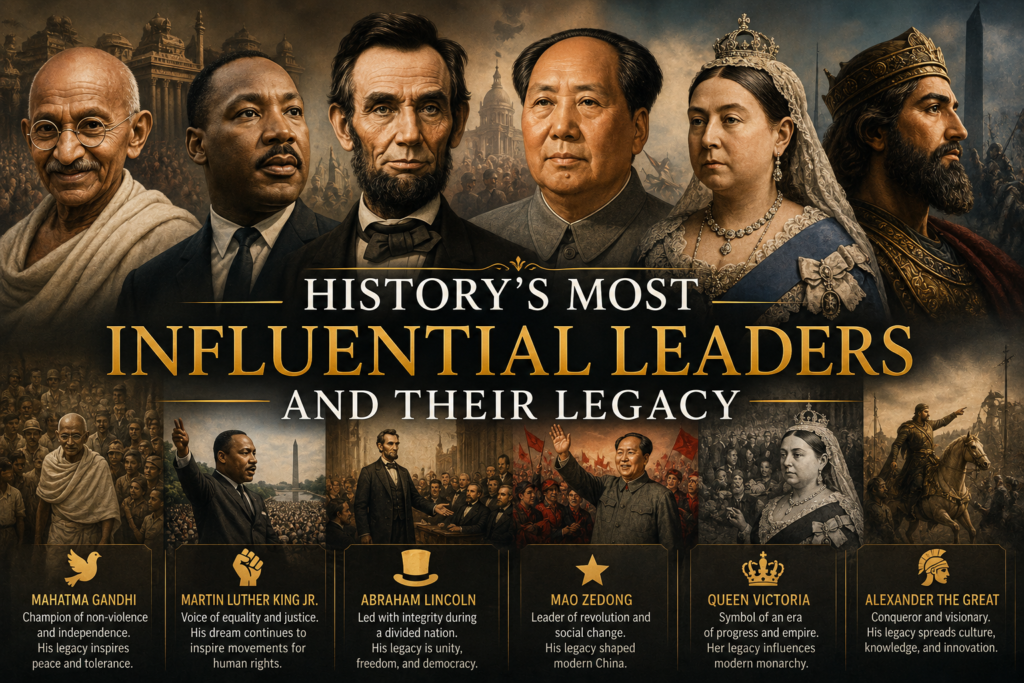
Then came her follow-up question. What did Lincoln actually do that made him effective? I had nothing. A mumbled line about the Civil War was all I managed before I quickly passed the conversation to the next person.
That embarrassing moment sent me down a rabbit hole. Biographies filled my reading list, history podcasts took over my commute, and I started paying attention to how leadership actually played out across different centuries and cultures. A few years later, I can finally answer that question properly, and I picked up a lot along the way.
This article shares what stuck with me. Real leaders, real mistakes, and real lessons you can actually use, not just a list of names and dates.
Why Studying Old Leaders Actually Helps You Today
I used to think history class existed purely to torture teenagers with dates and battles. Nobody explained the point.
Then a new job landed me under a genuinely difficult boss. Eleven at night found me Googling “how did great leaders handle criticism,” and Abraham Lincoln’s name kept popping up in the results. Lincoln kept rivals and critics inside his own cabinet instead of pushing them out. Doris Kearns Goodwin wrote an entire book about this strategy called “Team of Rivals.”
That single idea changed how I handled a difficult coworker. Instead of avoiding the person, I started asking for their opinion directly. It felt uncomfortable at first, but it worked better than ignoring the tension.
History isn’t just trivia. It functions like a massive database of leadership experiments, and plenty of them already ran the mistakes you’re about to make.
Cyrus the Great: The Leader Who Ruled Without Crushing Everyone
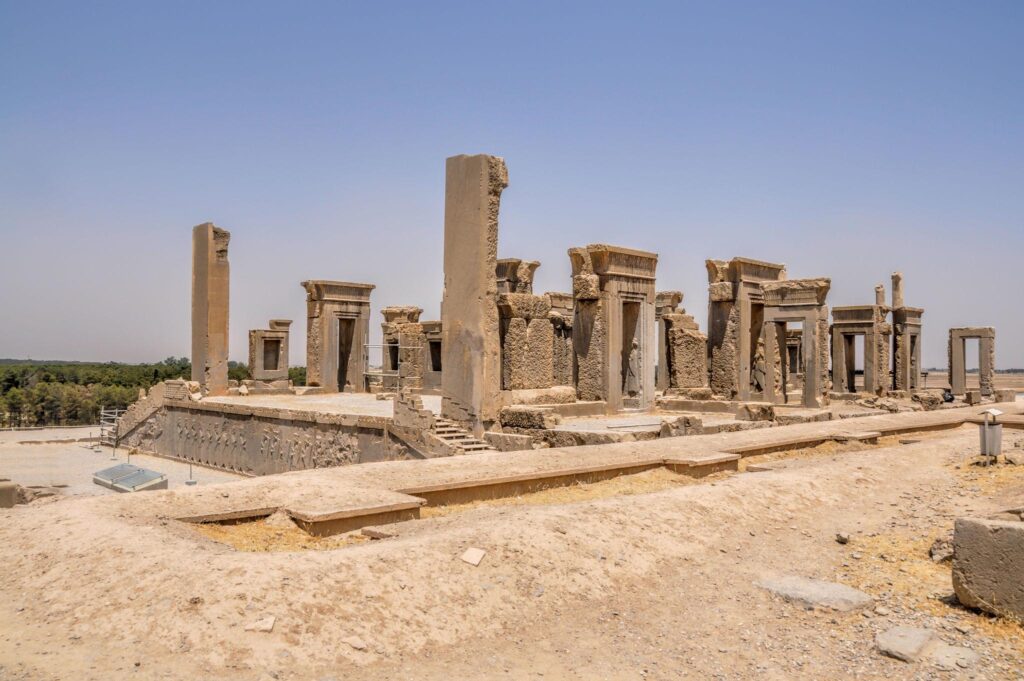
Cyrus founded the Persian Empire around 550 BCE, and he did something genuinely unusual for a conqueror of his era.
He let conquered people keep their own religions, languages, and customs. The Cyrus Cylinder, a clay artifact now sitting in the British Museum, records his policy of releasing captives and letting displaced groups return home. Some scholars call it one of the earliest documents touching on human rights, though that label gets debated among historians.
A traveling exhibit showed me a replica of the Cyrus Cylinder a few years ago. Standing in front of a two-thousand-year-old clay object covered in tiny cuneiform script felt strange. This wasn’t a monument built to intimidate people. It read almost like a policy memo.
The Lesson From Cyrus
Cyrus built one of the largest empires in ancient history, and restraint played as big a role in that as force did. He understood something a lot of modern managers still miss. People work harder for someone who respects their identity than for someone who tries to erase it.
Alexander the Great: Ambition With a Messy Aftermath
Alexander took over the throne of Macedon at twenty and conquered a massive stretch of territory from Greece to India before he turned thirty.
His military tactics still get taught at places like West Point. Speed defined his approach, along with constant adaptation and a habit of personally leading his troops into battle instead of directing from a safe distance.
But here’s the part that rarely makes it into the highlight reel. Alexander died at thirty-two without a clear succession plan. His empire fractured into competing kingdoms almost immediately after his death. Brilliant expansion, terrible exit strategy.
The Lesson From Alexander
I think about this one constantly at work. A team can grow fast under a talented leader, but growth without a succession plan tends to collapse the moment that leader leaves. I watched this happen at a startup I worked for. The founder left suddenly, and the company lost direction within six months because nobody had built systems that didn’t depend entirely on him.
Ashoka: The Conqueror Who Changed His Mind

This is genuinely one of my favorite leadership stories, and barely anyone talks about it outside of Indian history classes.
Ashoka ruled the Maurya Empire in ancient India, and early in his reign he fought the brutal Kalinga War around 261 BCE. Historical accounts describe massive casualties. Ashoka reportedly walked the battlefield afterward and felt sick over what he saw.
Guilt alone didn’t stop him from ruling the way he had before. He completely changed his governing style. He adopted Buddhist principles, banned certain forms of animal sacrifice, built hospitals, and carved edicts into stone pillars across his empire promoting religious tolerance and ethical behavior.
Several of these pillars still stand today. India even placed the Lion Capital of Ashoka on its national emblem.
The Lesson From Ashoka
Admitting you were wrong at a massive public scale takes serious guts. Most leaders double down on bad decisions instead of reversing course. Ashoka did the opposite, and his empire actually became more stable because of it.
Julius Caesar and Augustus: Two Very Different Kinds of Power
Julius Caesar gets more attention in pop culture, but I think Augustus deserves equal credit, maybe more.
Caesar expanded Roman territory dramatically and reformed the calendar system, giving us a structure close to the one we still use today. He also centralized power aggressively, which made the Roman Senate deeply nervous. That nervousness got him assassinated in 44 BCE.
Augustus, his adopted heir, learned from that mistake. He held enormous actual power but presented himself publicly as a servant of the Senate rather than a king. Everyone understood he ran the show, even though he called himself “first citizen” instead of emperor. Rome entered roughly two centuries of relative stability under this approach, known as the Pax Romana.
The Lesson From Caesar and Augustus
Caesar showed what happens when you grab power without managing perception. Augustus showed how much more sustainable power becomes when you share credit and soften your public image, even while holding tight control behind the scenes.
Genghis Khan: The Builder Behind the Brutal Reputation
Most people know Genghis Khan purely as a ruthless conqueror, and the brutality is real. Mongol campaigns killed enormous numbers of people across Asia and Eastern Europe.
What gets left out of casual conversation is the administrative system he built. Genghis Khan created the Yassa, a legal code applied across his empire. Relay stations called the Yam system let messages travel across thousands of miles faster than almost anywhere else in the world at that time. He also promoted people based on merit and loyalty rather than noble birth, which was genuinely rare for the era.
Trade flourished under Mongol rule because the empire protected merchants moving along the Silk Road. Historians sometimes call this stretch of relative safety the Pax Mongolica.
The Lesson From Genghis Khan
Even a leader with a brutal reputation built lasting systems that outlived the violence. Meritocracy and reliable infrastructure kept the empire functioning long after conquest alone would have failed.
Queen Elizabeth I: Steering a Country Through Constant Threats
Elizabeth I took the English throne in 1558 during a genuinely unstable period. Religious conflict split the country, and multiple foreign powers wanted her removed.
She fielded marriage proposals from across Europe for political leverage without ever actually marrying, which kept multiple nations hopeful and cooperative rather than hostile. England won a decisive victory when the Spanish Armada attacked in 1588, and that win cemented her reputation and set up decades of relative stability known as the Elizabethan Age.
Playwrights like Shakespeare flourished during her reign, and English exploration expanded significantly.
The Lesson From Elizabeth
Elizabeth mastered something modern leaders still struggle with: strategic patience. She delayed decisions when delay served her better than immediate action, and she used ambiguity as an actual tool rather than a weakness.
Abraham Lincoln: Leading Through the Worst Possible Circumstances
Back to the leader who started this whole journey for me.
Lincoln became president in 1861 right as the country split apart over slavery. He faced a war that killed more Americans than any conflict before or since, plus constant criticism from his own party.
His decision to fill his cabinet with rivals who had previously mocked or opposed him sounds counterintuitive, but it worked. He wanted the smartest people in the room, even when those people disagreed with him constantly. A military win eventually gave him the political leverage to issue the Emancipation Proclamation, and he waited for that moment instead of acting sooner despite serious pressure to do so.
The Lesson From Lincoln
Surrounding yourself with people who challenge you beats surrounding yourself with people who agree with everything you say. I genuinely apply this at work now. When I hire or collaborate, I actively look for people who will push back on my ideas instead of nodding along.
Mahatma Gandhi: Proving Restraint Can Beat Force
Gandhi led India’s independence movement against British rule using nonviolent civil disobedience, a strategy that seemed almost naive on paper against a massive colonial empire.
The Salt March in 1930 stands out as a perfect example. Gandhi and his followers walked roughly 240 miles to the Arabian Sea to make salt illegally, directly protesting a British salt tax. The march itself accomplished nothing materially, but the imagery and public attention it generated shifted global opinion against British colonial policy.
India gained independence in 1947, and Gandhi’s approach influenced later movements led by Martin Luther King Jr. and Nelson Mandela.
The Lesson From Gandhi
Sustained, disciplined pressure sometimes beats aggressive confrontation. I’ve watched this play out in smaller ways at work too. A colleague who calmly and consistently raised the same valid concern in every meeting eventually got policy changed, while a coworker who exploded angrily in a single outburst usually got dismissed.
Nelson Mandela: Choosing Reconciliation Over Revenge
Mandela spent 27 years in prison under South Africa’s apartheid government before becoming president in 1994.
Nobody would have blamed him for seeking punishment against the people who imprisoned him. Instead, he pushed for the Truth and Reconciliation Commission, a process that let people confess apartheid-era crimes publicly in exchange for amnesty rather than facing prosecution.
I read “Long Walk to Freedom,” Mandela’s autobiography, during a rough personal stretch a few years back. One line stuck with me. He wrote that resentment is like drinking poison and expecting it to hurt your enemy. That sentence alone reshaped how I handled a falling-out with an old friend.
The Lesson From Mandela
Holding onto anger costs the person holding it more than it costs anyone else. Mandela chose a harder emotional path because it produced a more stable outcome for an entire country.
Winston Churchill: A Complicated Legacy Worth Understanding Fully
Churchill led Britain through World War II with speeches that genuinely rallied a country facing invasion. His radio broadcasts still get studied in communication and public speaking courses.
But his legacy isn’t clean. Critics still condemn his decisions during the Bengal famine, and his views on colonialism and race reflected deeply troubling attitudes even by the standards of parts of his own era.
I bring this up because most leadership content online oversimplifies historical figures into pure heroes or pure villains. Real historical leaders almost always did some genuinely admirable things alongside some genuinely harmful ones.
The Lesson From Churchill
Nuance matters more than hero worship. You can study someone’s effective decisions during a crisis while also acknowledging the damage they caused elsewhere. Pretending otherwise makes the history lesson useless.
Common Mistakes People Make When Studying Historical Leaders
I’ve made most of these mistakes myself, so consider this a shortcut past them.
People treat leaders as flawless heroes. Nearly every influential leader made serious mistakes alongside their achievements. Skipping the flaws teaches you nothing useful.
People copy tactics without understanding context. A strategy that worked during wartime Britain won’t automatically translate to a modern office disagreement. Context always matters more than the specific tactic.
Western leaders dominate most casual conversations about this topic. Cyrus, Ashoka, and Genghis Khan rarely show up in those discussions, even though their strategies remain incredibly relevant.
People confuse charisma with effectiveness. Some leaders gave incredible speeches but made terrible long-term decisions. Others communicated poorly but built systems that lasted centuries. Both traits matter separately.
A three-paragraph Wikipedia summary skips the nuance that makes these stories actually useful. Real lessons hide in the details, not the highlight reel.
How to Actually Study Leadership From History Yourself
Here’s the process I built after that embarrassing offsite moment, step by step.
Step one: pick one leader, not ten. I made the mistake early on of trying to learn everyone at once. Pick a single figure who genuinely interests you and go deep before moving to the next.
Step two: start with a well-reviewed biography instead of a random blog post. “Team of Rivals” by Doris Kearns Goodwin covers Lincoln brilliantly. “Long Walk to Freedom” covers Mandela in his own words. Check Goodreads ratings before committing to a book, since not every biography is equally well written.
Step three: use an audiobook app for your commute. I listen through Audible or Spotify’s audiobook section during my drive. A dense biography feels far more manageable in twenty-minute daily chunks than in one long reading session.
Step four: try Blinkist for a quick overview before committing to a full book. It condenses nonfiction books into fifteen-minute summaries, which helps you decide if a full biography is worth your time.
Step five: listen to a history podcast for context and debate. “The Rest Is History” and “Hardcore History” both cover these figures with genuine depth and disagreement between hosts, which keeps the content from feeling like a one-sided highlight reel.
Step six: write down one specific tactic, not a vague takeaway. Skip writing “Lincoln was a good leader” in your notes. Write “Lincoln kept critics close instead of pushing them out” instead. Specific tactics actually transfer into real decisions.
Step seven: apply the tactic to one real situation within a week. Reading about leadership without applying it is just entertainment. I forced myself to use one lesson per book within a week of finishing it, even in a small low-stakes way.
Real Examples of Applying These Lessons
A coworker of mine kept undermining my proposals in meetings a while back. My instinct was to avoid her entirely.
Lincoln’s cabinet approach changed my mind, so I asked her directly for feedback on my next proposal before the meeting happened. She had legitimate concerns I hadn’t considered, and the final version of the plan turned out stronger because of her input. The tension mostly disappeared once she felt heard instead of ambushed.
Another example: snap decisions under pressure used to be my default, and I regretted most of them almost immediately. Elizabeth I’s strategic patience stuck with me during a tense contract negotiation. I delayed my response by 24 hours instead of reacting immediately, which gave me time to consult a mentor and avoid a decision I would have regretted.
Small moments, but the historical pattern held up in modern life more often than I expected.
Final Thoughts
That leadership offsite question felt humiliating at the time, but it turned into one of the more useful accidents of my career. History isn’t just a graveyard of names and dates sitting behind glass in a museum.
These leaders faced real pressure, made real mistakes, and left behind patterns you can actually study and apply. Some of them got it right through patience, some through humility, and some through simply refusing to give up during impossible circumstances.
Next time someone asks who you admire and why, you’ll actually have an answer ready, and hopefully a better one than mumbling about a penny in your pocket.