

The first time A Practical Way to Find Hidden Adventures Before You Go
You don’t need to leave everything to chance. A little preparation can make the spaces between landmarks far more rewarding.
Use Google Maps Beyond Navigation
Start with Google Maps in satellite view. Most travelers only use it for directions, but it can reveal far more. Zoom into the areas between your planned attractions and study the streets. Wide roads usually indicate busy tourist routes, while narrow lanes often lead to older neighborhoods full of local character.
Explore Routes With Komoot or AllTrails
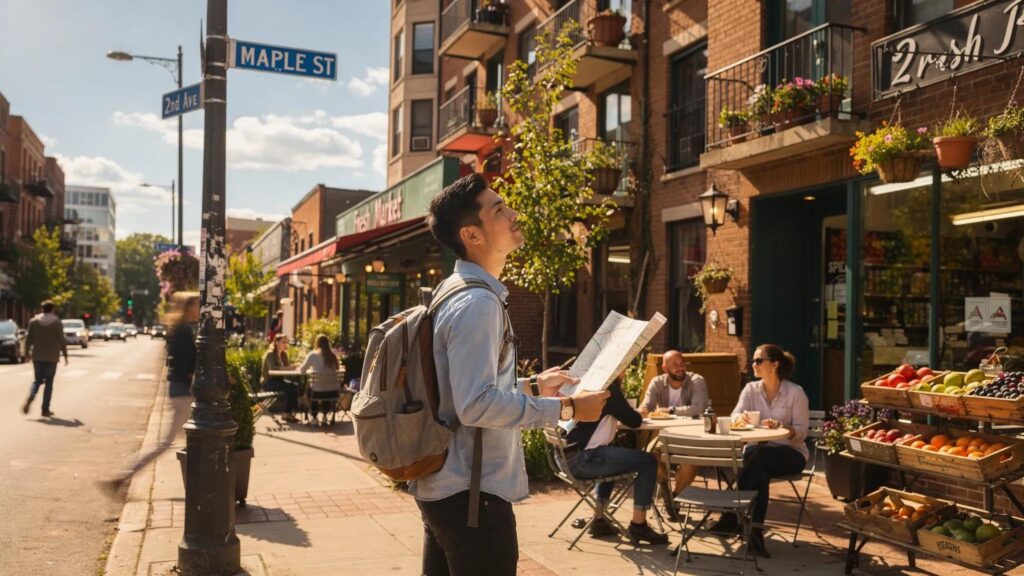
If your destination includes parks, rivers, or scenic districts, apps like Komoot and AllTrails can uncover beautiful walking routes. During a visit to Budapest, I used Komoot to connect the Chain Bridge and Parliament Building through a peaceful riverside path. The walk took longer, but it became one of my favorite memories from the city.
Search Atlas Obscura for Hidden Gems
Atlas Obscura has become one of my favorite travel resources. The site highlights unusual places that rarely appear in guidebooks. Hidden courtyards, forgotten monuments, underground spaces, and overlooked museums can often be found within minutes of famous attractions.
Research Neighborhoods Instead of Landmarks
Many travelers search only for major attractions. Instead, search the neighborhood around them. Looking up local districts often reveals bakeries, bookstores, cafés, markets, and small cultural sites that most visitors never discover.
What to Actually Do When You’re Walking Between Landmarks
The journey between attractions is where many unforgettable experiences happen.
Put Your Phone Away Occasionally
Navigation apps are useful, but they can also become a distraction. Walking for a block or two without constantly checking your screen helps you notice details that would otherwise go unseen.
Follow Interesting Sounds
Music, laughter, conversations, and local activity often signal something worth exploring. While wandering through Marrakech, I followed the sound of metalworking and discovered a workshop where artisans crafted traditional lanterns by hand.
Spend Time Simply Observing
Find a bench, café terrace, or quiet square and sit for a few minutes. Watching daily life unfold provides a deeper understanding of a destination than rushing from attraction to attraction.
Eat Where Locals Gather
One simple rule has served me well: look for places where local residents are eating. Family-owned restaurants and neighborhood cafés often provide a more authentic experience than businesses located directly beside famous attractions.
The Mistakes I Made Before I Figured This Out
Over-Scheduling Every Day
Early in my travels, I tried to see everything. One Rome itinerary included eleven different attractions in a single day. Although I completed every stop, very little stayed in my memory afterward.
Choosing Only the Fastest Route
Navigation apps prioritize efficiency, not discovery. Allowing extra time for wandering often leads to unexpected encounters, hidden viewpoints, and memorable conversations.
Trusting Social Media Too Much
Some locations promoted as hidden gems become extremely crowded after gaining attention online. A truly special place is often one you discover yourself rather than one promoted by thousands of influencers.
Ignoring Local Recommendations
Shop owners, café staff, and longtime residents often provide better suggestions than travel websites. A simple question can lead to experiences that never appear in guidebooks.
Real Examples Worth Tracking Down
Paris: Passage des Panoramas
Located between the Grands Boulevards and the Opéra district, this historic covered arcade offers antique shops, small restaurants, and beautiful architecture that many visitors overlook.

Istanbul: Balık Pazarı
Between Galata Tower and Istiklal Avenue sits a lively neighborhood filled with seafood restaurants, local cafés, and traditional atmosphere.
Kyoto: The Streets Between Fushimi Inari and Tofuku-ji
This residential area features traditional wooden houses and quiet streets that provide a glimpse into old Kyoto away from tourist crowds.
New York: West Chelsea Galleries
While many visitors focus on the High Line, the nearby streets contain dozens of independent art galleries that are free to enter and rarely crowded.
The Simple Truth About Hidden Adventures
Hidden adventures are not really hidden at all. Most simply exist outside the spotlight. They don’t appear on postcards, they rarely make travel headlines, and they often lack signs directing visitors toward them.
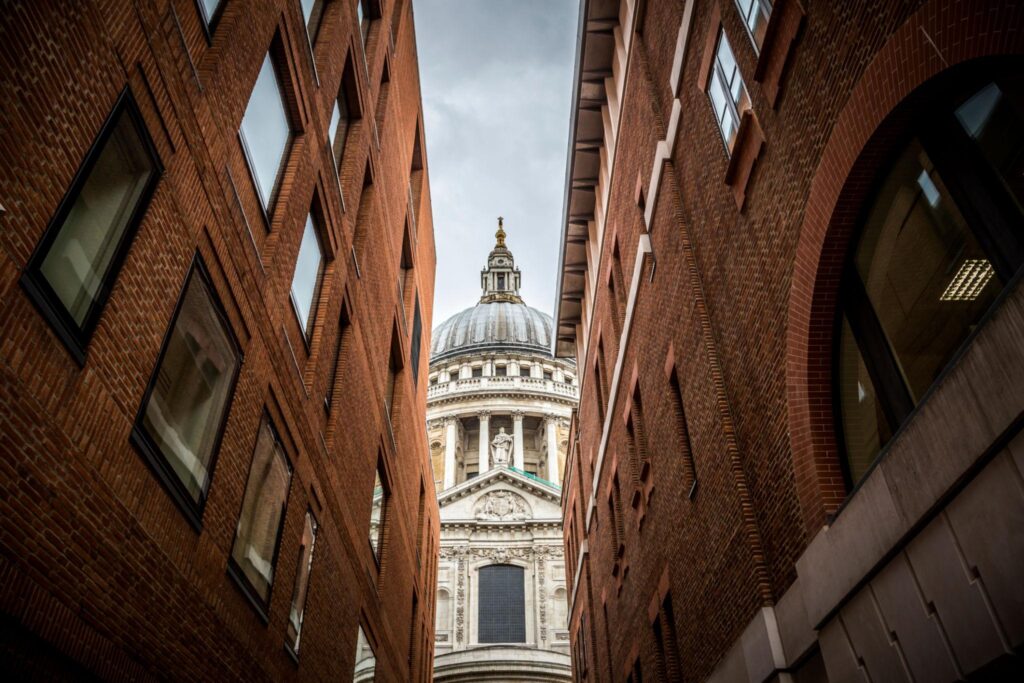
Famous landmarks deserve their reputation, and they are absolutely worth seeing. However, some of the most meaningful travel memories happen while walking between those famous places. A quiet street, a family-run café, a local market, or a conversation with a resident can leave a stronger impression than any attraction ticket ever could.
The next time you travel, keep the landmarks on your list. Then give yourself permission to wander a little farther. You may discover that the best part of the trip was never on the itinerary at all.
Absolutely. The article has a strong idea and personal voice, but it needs editing for clarity, readability, SEO, and AdSense quality. Below is a polished version of the introduction and structure that keeps the human-written feel while removing awkward wording, grammar issues, excessive formatting, and AI-like phrasing.
You can continue the rest of the article in this same style.
Slow Down: How I Stopped Being in Such a Hurry and Started Living My Life
Last Sunday, I was sitting at my kitchen table with a cold cup of coffee beside me. My laptop was open, my phone buzzed every few minutes, a half-written grocery list sat nearby, and a podcast played in the background that I wasn’t really listening to.
I told myself I was relaxing.

The truth was, I wasn’t doing any one thing well. My attention was scattered across five different activities, and somehow I still felt restless.
That was the moment something clicked.
I had become so used to filling every spare second with tasks, notifications, and information that I had forgotten how to simply be present. Even during my downtime, I was constantly trying to optimize, learn, plan, or catch up.
I wasn’t physically exhausted. I was mentally exhausted in a way that sleep alone couldn’t fix.
If you’ve ever felt like you’re always busy but rarely feel satisfied, this article is for you.
What Slow Living Really Means
When people hear the phrase “slow living,” they often imagine moving to the countryside, baking sourdough bread, or spending afternoons in a beautiful cottage surrounded by nature.
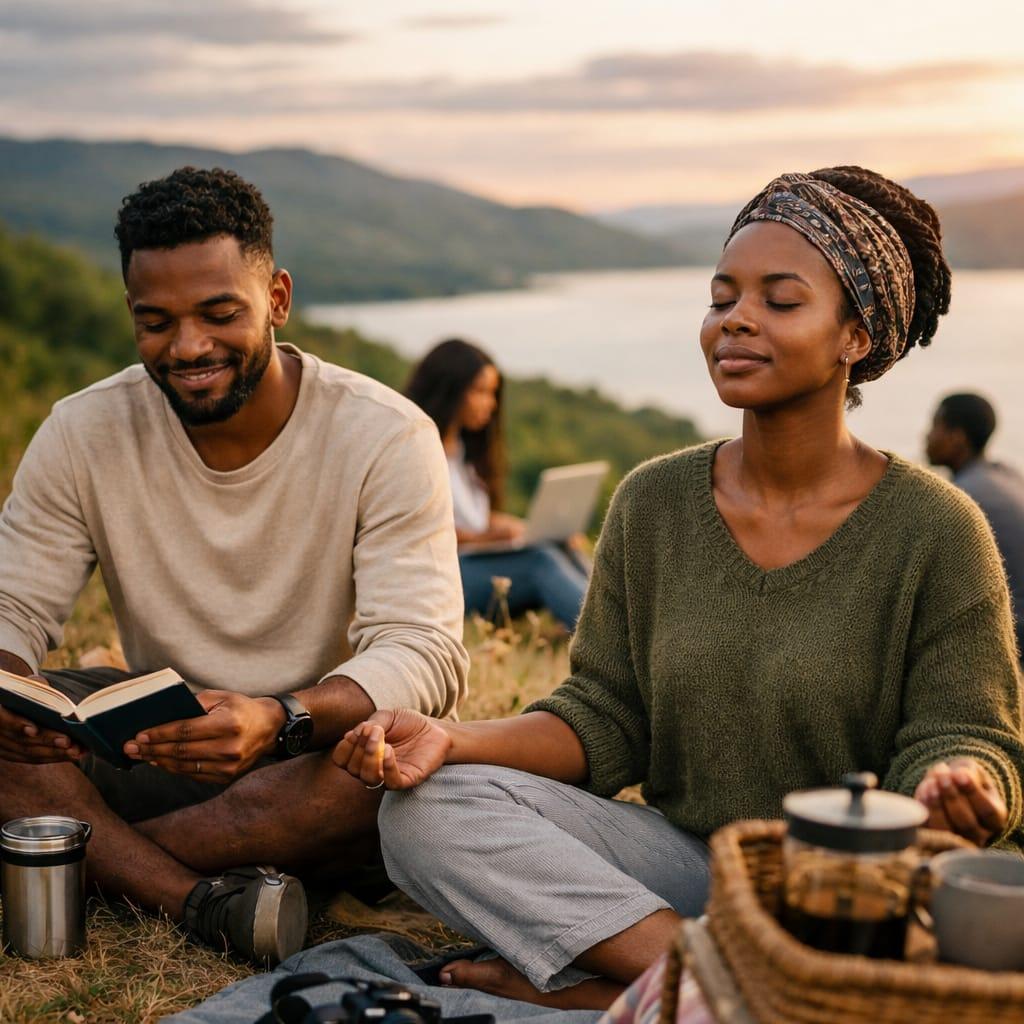
While there’s nothing wrong with that lifestyle, slow living is much simpler than the image often shown on social media.
Slow living is about being intentional with your time and attention.
It’s choosing to focus on what you’re doing right now instead of constantly thinking about what’s next. It’s deciding what deserves your energy instead of letting notifications, deadlines, and endless distractions make that decision for you.
The goal isn’t to do less.
The goal is to experience more of the life you’re already living.
You can have a busy career, raise children, run a business, and still practice slow living. It’s not about your schedule. It’s about how you move through your schedule.
Why Slowing Down Feels So Difficult Today
Modern life encourages speed.
Our phones are designed to grab our attention. Social media platforms reward constant engagement. Emails arrive around the clock. Streaming services encourage us to watch one more episode.
Even our free time has become productive.
We listen to podcasts while exercising. We answer messages while eating lunch. We scroll through social media while watching television.
For years, I thought this was normal.
Then one evening I sat down with a paperback novel. Within minutes, I caught myself reaching for my phone without even thinking about it.
Nothing had happened.
No notification.
No urgent message.
My brain had simply become accustomed to constant stimulation.
That moment was uncomfortable because it forced me to admit something: my attention span wasn’t what it used to be.
The more I paid attention, the more I realized that constant busyness wasn’t making me happier. It was making me distracted.
How I Started Slowing Down Without Changing My Entire Life
One misconception about slow living is that it requires a dramatic life change.
That wasn’t my experience.
I didn’t quit my job.
I didn’t move to a remote village.
I didn’t delete every app from my phone.
Instead, I made small changes that gradually added up over time.
1. I Protected My Mornings
For years, my phone was the first thing I looked at every morning.
Before I even got out of bed, I checked emails, news headlines, and social media updates.
One day, I decided to try something different.
For the first 30 minutes after waking up, I wouldn’t touch my phone.
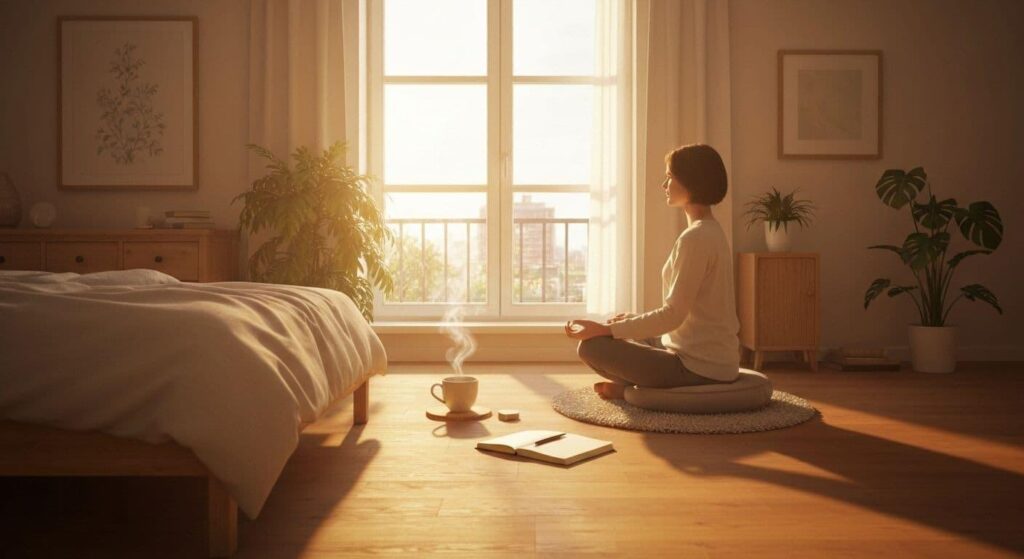
Instead, I drank coffee, stretched, wrote in a notebook, or simply sat quietly.
The first few days felt strange.
I realized how dependent I had become on instant information and stimulation.
After a couple of weeks, something changed.
My mornings felt calmer.
I started the day feeling more focused and less reactive.
Protecting those first few minutes became one of the most valuable habits I’ve ever developed.
2. I Stopped Trying to Multitask
For a long time, I believed I was good at multitasking.
The reality was that I was constantly switching between tasks.
I would answer messages while working, listen to a podcast while cooking, and check social media while watching television.
Nothing received my full attention.
So I started practicing single-tasking.
When I write, I write.
When I eat, I eat.
When I talk with someone, I try to be fully present in the conversation.
At first it felt slower.
In reality, everything became easier and the quality of my work improved.
One tool that helped me was the mobile app Forest. The app encourages focused work sessions by rewarding you for staying off your phone.
3. I Created More Empty Space in My Calendar
There was a time when every hour of my week had a purpose.
Meetings.

Errands.
Appointments.
Projects.
Plans.
Whenever something unexpected happened, my entire schedule felt disrupted.
Eventually, I started leaving small gaps in my calendar.
A free Sunday morning.
An hour with nothing planned.
An afternoon walk without a specific destination.
At first, this felt unproductive.
Then I noticed something surprising.
Many of my best ideas arrived during those unscheduled moments.
So did some of my most.
Rest isn’t wasted time.
Sometimes it’s the space that allows everything else to work better.