

The first time I really paid attention to how much prep goes into Eid morning, I was standing in a kitchen at five thirty in the morning watching a friend’s mother roll out dozens of pieces of dough for sheer khurma while three different pots simmered on the stove at once. Everyone in that house had been up before sunrise, not because Eid demands it exactly, but because there’s a kind of joyful urgency to getting everything ready before the day actually starts.

I remember thinking the whole thing looked chaotic. It wasn’t. Every person in that kitchen had a job, the kids included, and by the time the sun was fully up, the house smelled like cardamom and rosewater and there was a table groaning under more food than seemed reasonable for one morning.
That’s the thing about Eid that doesn’t really come through if you’ve only heard about it secondhand. It’s not just a holiday with a checklist of customs. It’s this whole rhythm, prayer, food, family, generosity, all stacked together in a way that makes the day feel completely different from any ordinary morning.
The Two Eids, and Why They Feel Different
There are two Eid celebrations in the Islamic calendar, and people unfamiliar with them sometimes assume it’s just one holiday celebrated twice. It’s really two distinct occasions with different moods, and both follow the lunar Islamic calendar, so the actual dates shift earlier each year on the regular calendar rather than landing on a fixed date.
Eid al-Fitr comes right after Ramadan ends, marking the close of a month of fasting. The feeling around this one is lighter, almost relief mixed with celebration, since a month of early mornings and long fasting days has just wrapped up. Eid al-Adha comes later in the year and centers on the story of sacrifice, tied to the Hajj pilgrimage, and it carries a slightly more reflective, generous tone, especially around the tradition of sharing meat from a sacrificial animal with family, neighbors, and those in need.
Both days share a similar shape though. Morning prayers, new clothes, big family meals, and visiting relatives. The specific food and a few customs shift depending on which Eid it is and which country or family tradition you’re following, but the core feeling, gratitude and togetherness, stays the same.
What Eid Morning Actually Looks Like
If you’ve never been part of an Eid celebration, the morning routine might surprise you with how early and how structured it is.
Families usually wake up before sunrise. There’s a special prayer, Salat al-Eid, performed in congregation, often at a mosque or in a large open space if the community is big enough that the mosque can’t hold everyone. People dress in new or their nicest clothes for this, which is one of the small details that makes the morning feel different from a regular Friday prayer.
After the prayer, the rest of the morning shifts into food and family mode almost immediately. It’s common to break into smaller groups visiting different relatives’ homes throughout the day, with each house offering food, sweets, and usually small gifts of money to children, something often called Eidi.
Recipes That Show Up Again and Again
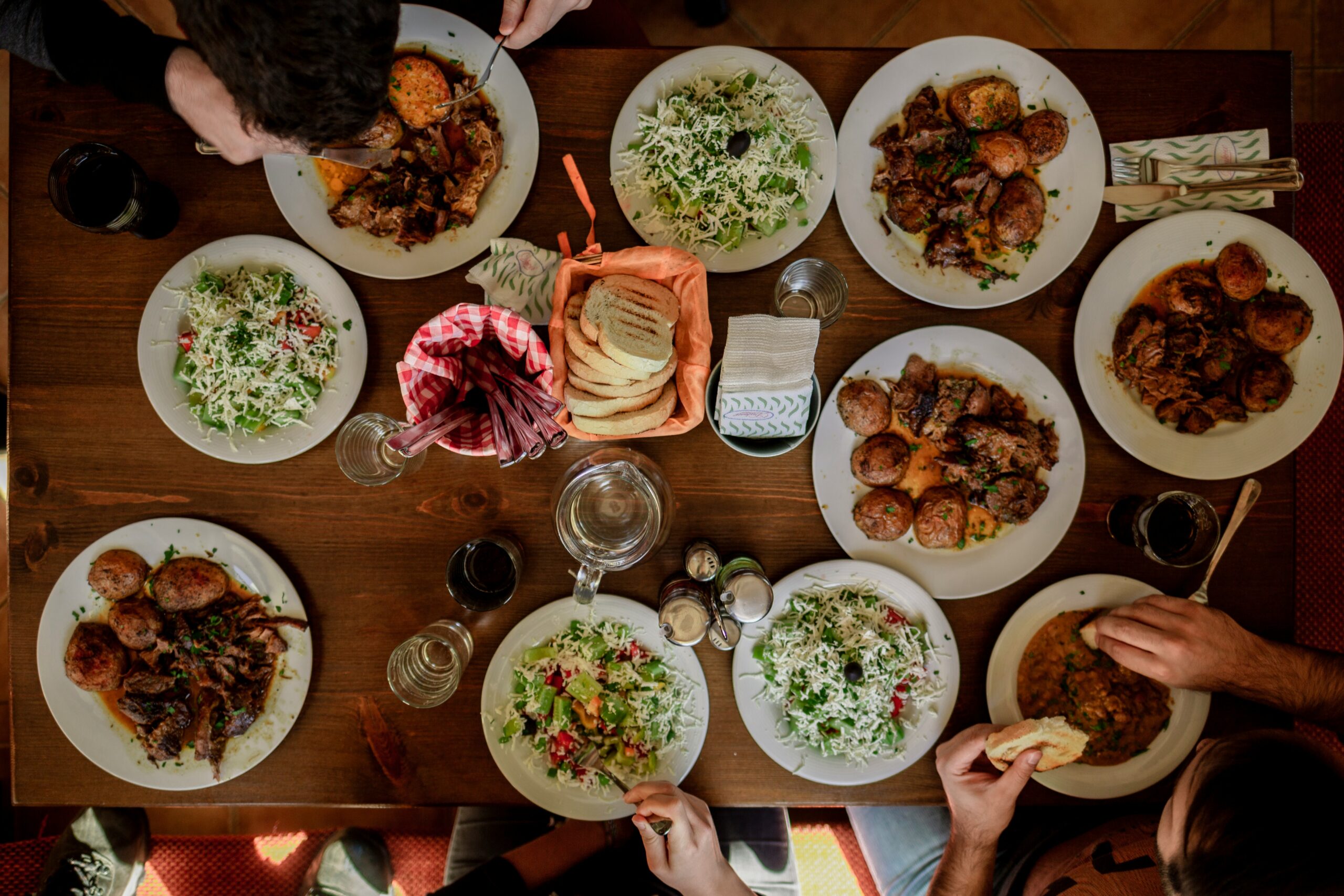
Food is honestly half the reason Eid feels so special, and a handful of dishes show up across many households, even though the exact recipe varies family to family.

Sheer khurma is probably the most iconic Eid al-Fitr dish in South Asian households. It’s a sweet vermicelli dish made by toasting thin noodles in ghee, then simmering them in milk with dates, dried fruits, and nuts like almonds and pistachios. Cardamom and a bit of rosewater usually go in near the end. It’s rich, it’s sweet, and it’s traditionally the first thing eaten after morning prayers, almost like breaking the final fast of Ramadan with something celebratory.
Biryani shows up at a huge number of Eid meals, particularly for the bigger midday or evening gatherings. Layers of spiced rice and marinated meat, slow cooked together, are basically built for feeding a large family table.
Kebabs and seekh kebabs are common too, especially for Eid al-Adha when there’s often fresh meat from the sacrificial animal to use. Ground meat mixed with spices, shaped onto skewers, and grilled or pan fried.
Maamoul, shortbread cookies filled with dates, walnuts, or pistachios and often stamped with decorative patterns using a wooden mold, are a staple in many Middle Eastern households, particularly for Eid al-Fitr.
Baklava and other syrup soaked pastries make frequent appearances too, especially in Turkish, Lebanese, and broader Middle Eastern celebrations, often bought from a trusted local bakery rather than made at home since the layered phyllo work takes real skill.
Step by Step: How Families Typically Prepare for Eid
For anyone trying to understand or plan around the lead-up to Eid, here’s roughly how the preparation tends to unfold in a lot of households.
A few days before, there’s usually a dedicated shopping trip for new clothes, since wearing something new is a common custom for the morning prayer, even if it’s just one new item rather than an entirely new outfit. Around the same time, families often deep clean the house, sometimes called spring cleaning but timed around Eid instead.
The night before, called Chaand Raat in South Asian tradition, meaning moon night, is its own mini celebration. Markets stay open late, women and girls often get henna applied to their hands, and there’s a buzzing, festive energy in the air as everyone finishes last minute shopping and prep.
Cooking usually starts very early on the actual day, sometimes before dawn, especially for dishes like sheer khurma that need to be ready right after morning prayer. Other dishes for the bigger midday meal get started once everyone’s back from prayer.
Throughout the day, the visiting begins. Families move between relatives’ homes, and at each stop there’s more food, more sweets, and catching up. It’s common for kids to end the day with pockets full of Eidi money from various aunts, uncles, and grandparents.
A Few Things That Often Get Overlooked by People New to Eid
One thing that surprises people who haven’t experienced Eid directly is just how much of it centers on giving, not just receiving. Zakat al-Fitr, a form of charity, is typically given before the Eid al-Fitr prayer specifically so that less fortunate families can also celebrate properly. For Eid al-Adha, a portion of the sacrificial meat is set aside specifically to be distributed to those in need, it’s not just a family meal, it’s built into the tradition that the celebration includes people outside your own household too.
Another detail that’s easy to miss is how much the day revolves around repairing or strengthening relationships. It’s common and encouraged to reach out to family members you might have had a falling out with, visit elderly relatives who can’t easily travel, and make a point of including people who might otherwise spend the day alone.
Common Mistakes or Misunderstandings to Avoid
Assuming Eid is celebrated identically everywhere is a common one. Customs shift significantly by country and culture. What an Eid celebration looks like in Pakistan, Turkey, Indonesia, Nigeria, or Saudi Arabia can differ quite a bit in food, dress, and specific traditions, even though the religious core stays the same.
Treating Eid al-Fitr and Eid al-Adha as interchangeable is another mistake worth avoiding. They mark very different occasions, and mixing up the customs or greetings, though usually forgiven easily, can come across as not having taken the time to understand which one is actually being celebrated.
Underestimating how much advance planning goes into the food trips people up too. Dishes like biryani or sheer khurma aren’t quick. If you’re invited to an Eid gathering or hosting one yourself for the first time, it helps to know that the cooking often starts a day or more ahead for some dishes, and well before sunrise on the day itself for others.
Forgetting the charitable aspect entirely is easy to do if you’ve only seen the holiday from the outside. For anyone trying to understand the holiday more fully, missing the Zakat al-Fitr and the broader spirit of generosity means missing a pretty central part of what the day is actually about, not just an optional add-on.
Assuming gift giving needs to be elaborate is a common misread as well. Eidi, the small gifts of money given to children, is meant to be a simple, joyful gesture, not a competition. The amount matters far less than the act itself.
Final Thoughts
What’s stuck with me most about being around Eid celebrations over the years isn’t any single dish or custom, it’s how layered the whole day is. There’s the spiritual weight of the morning prayer, the warmth of a kitchen that’s been working since before sunrise, the specific joy on a kid’s face when they collect Eidi from every relative they visit, and underneath all of it, this quiet insistence that the celebration isn’t really complete unless it includes people who have less than you do.
If you’re attending your first Eid celebration, or hosting one, or just trying to understand a friend’s traditions a little better, the best approach is honestly just showing up with curiosity and an appetite. Ask questions, try the food, and don’t worry about getting every custom exactly right on the first try. The warmth of the day tends to make room for that.
Self-Care Sunday: 15 Ideas to Recharge Your Body and Soul
For about two years, my version of self-care Sunday was lying on the couch scrolling my phone for six hours while telling myself I was relaxing. I’d end the day feeling worse than when I started, eyes tired, neck stiff, and somehow more anxious than Saturday night, not less.
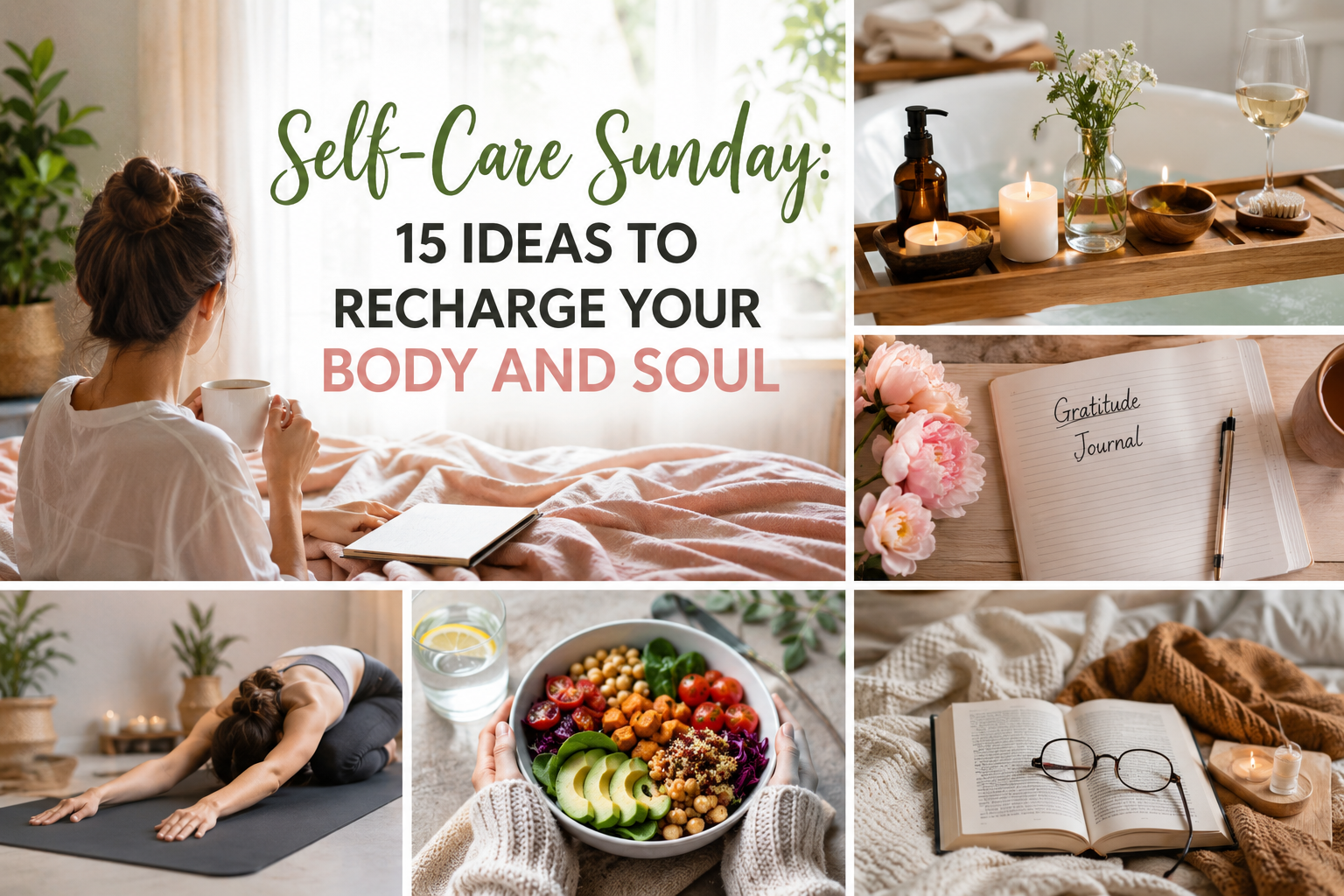
It took an actual bad week, the kind where I cried in my car in a grocery store parking lot, to make me realize I’d been confusing doing nothing with taking care of myself. Those aren’t the same thing at all.
So I started experimenting. Genuinely treating Sunday like a small reset instead of a write-off day before the week started again. Some of what I tried was a total flop. Some of it stuck around and is still part of my routine years later. Here’s the real list, the stuff that actually worked, not just things that sound nice on paper.
Why Doomscrolling Isn’t Self-Care, Even Though It Feels Like It
This took me embarrassingly long to figure out. Scrolling feels passive and easy, which tricks your brain into thinking it’s restful. But it’s not restful at all, your brain is processing a constant stream of new information, comparison, and stimulation the whole time.
I noticed the difference the first weekend I actually tried something else instead. I felt clearer by Sunday evening instead of foggy. That contrast is what got me to keep going.
Real self-care usually involves doing something, even something small and quiet, not just consuming content. Here’s what’s actually worked.
15 Ideas That Actually Recharge You (Not Just Distract You)
A proper morning with no phone for the first hour was the hardest one to stick to and also the one that made the biggest difference. I leave my phone charging in another room overnight now and just don’t touch it until I’ve had coffee and at least sat outside for a few minutes. The first few Sundays felt almost itchy without it. Now it’s the part of the week I look forward to most.
A slow, real breakfast matters more than I expected. Not cereal eaten standing at the counter, something you actually sit down for. I started making myself proper eggs and toast on Sundays specifically, nothing fancy, just something that takes fifteen minutes of attention instead of two.
A walk with no destination and no podcast changed how I experience the rest of the day. I used to fill every walk with a podcast or audiobook, which is fine most days, but on Sundays I started leaving my earbuds at home entirely. Just walking and noticing things. It sounds small. It genuinely changes how the rest of the day feels.
Stretching or a slow yoga session doesn’t need a studio. I use free YouTube videos, Yoga with Adriene is the one I keep coming back to, for twenty minutes of slow, unhurried movement. No goal of getting better at it, just moving.
Journaling, even just three sentences, stuck around when longer journaling didn’t. I tried full page journaling and gave up within a month, it felt like homework. What stuck was just three lines most Sundays: how I’m feeling, one thing I’m looking forward to, one thing I want to let go of from the week before. Takes five minutes.
A real bath, not a five minute shower, sounds basic but most weeks I don’t make time for it. Epsom salts, maybe a candle, twenty minutes with no phone in the room. My shoulders genuinely feel different afterward.
Cooking something that takes a while turns into its own kind of meditative task. Most weekday meals are rushed out of necessity. Sunday is when I’ll make something that takes an hour or two, not because it’s complicated but because there’s no rush attached to it. Slow cooking a soup, a roast, whatever, gives the afternoon a different pace.
Decluttering one small area, not the whole house, was a lesson I learned the hard way. I made the mistake early on of trying to deep clean the entire apartment on a self-care Sunday, which obviously just turned into more stress. Now I pick one drawer, one shelf, one small spot. Ten minutes, done, and somehow that small bit of order makes the whole space feel calmer.
Calling someone instead of texting hits differently than I expected. Texting all week is fine, but an actual phone call with a friend or family member on a Sunday feels different. I started doing this with my mom specifically, a real call instead of a quick text thread, and it’s become one of the parts of the week I genuinely look forward to.
Reading something that isn’t for work or self-improvement took me a while to actually do. For a long time my reading was all productivity books and articles, which isn’t really restful, it’s just work disguised as relaxation. Now I keep a paper novel specifically for Sundays, something with no lesson attached, just a story.
Meal prepping for the week, but treating it as care instead of a chore, changed how I felt about doing it. I used to resent Sunday meal prep until I reframed it. It’s not a chore, it’s future me getting taken care of by present me. That shift in framing alone made the task feel completely different, even though nothing about the actual task changed.
A face mask or basic skincare routine, slowed down, became its own small ritual. I’m not big on elaborate skincare, but slowing down a basic routine, actually taking ten minutes instead of rushing through it before bed, makes it feel like care instead of maintenance.
Sitting outside doing genuinely nothing felt strange at first. Not reading, not on the phone, just sitting outside for ten or fifteen minutes. This felt almost uncomfortable the first few times, like I was wasting time. It stopped feeling that way once I noticed how much calmer I felt afterward.
Listening to music with actual attention is different from background noise in a way I’d genuinely forgotten. Not background music while doing chores, but sitting down and actually listening to an album start to finish. I’d forgotten how different this feels from music as background noise until I tried it again.
Planning one small thing to look forward to in the coming week surprised me with how effective it is. Even something tiny, a coffee date, a new recipe, an episode of a show you’re saving, gives the week ahead a little anchor point instead of just stretching out as an undefined block of obligations.
Step by Step: Building Your Own Self-Care Sunday
You don’t need all fifteen of these every week. Trying to cram them all in defeats the purpose entirely. Here’s how I’d actually suggest starting.

Pick two or three from the list that genuinely appeal to you, not the ones that sound the most impressive or productive. The walk and the slow breakfast were my starting point, mostly because they required zero planning.
Block out a rough time window, even just two hours, rather than leaving the whole day vague. A vague sense that you’ll do self-care stuff today tends to dissolve into the couch and the phone by eleven, which is exactly the pattern you’re trying to break.
Remove the option to default into old habits during that window specifically. For me that meant physically leaving my phone in another room. Your version might be different, but removing the easy fallback matters more than people expect.
Notice how you feel afterward, not just during. The actual payoff of this stuff often shows up a few hours later, not in the moment. I started noticing I felt steadier on Monday mornings, which is what eventually convinced me to keep going.
Adjust week to week. Some Sundays I want the bath and the slow cooking. Other weeks I just want the walk and the phone call. There’s no fixed formula, the point is intention, not a checklist you’re obligated to complete.
A Real Example From My Own Routine Now
A typical self-care Sunday for me now looks like phone left in the bedroom until at least nine, coffee outside for ten minutes, a slow breakfast, then a walk without earbuds for twenty or thirty minutes. Midday I’ll do a small declutter task, one drawer or shelf, then call my mom while prepping something for dinner that takes a while. Evening is usually the bath or the face mask, plus actual reading instead of scrolling before bed.
That’s maybe five of the fifteen ideas in any given week, not all of them. The rotation keeps it from feeling like a rigid checklist.
Common Mistakes to Avoid
Trying to do everything on the list at once turns self-care into another to-do list, which defeats the entire point. Pick a few things, not all fifteen.
Treating self-care Sunday as an excuse to do absolutely nothing misses the actual goal. There’s a real difference between rest and numbness. Scrolling for six hours isn’t rest, even though it feels passive.
Scheduling it so rigidly it becomes stressful backfires too. If self-care Sunday starts to feel like an obligation with a strict checklist, it stops being restorative. Keep it loose.
Comparing your version to elaborate routines online sets an unfair bar. A lot of what gets posted online involves expensive products or hour long routines that aren’t realistic for most actual weeks. The basic version, a walk, a real breakfast, a phone call, does more than people expect.
Skipping it the moment life gets busy is the most common mistake of all. The weeks I most wanted to skip this were almost always the weeks I needed it most. It’s tempting to cut it when things pile up, but that’s usually exactly backwards.
Final Thoughts
The version of Sunday I used to have wasn’t rest, it just looked like rest from the outside. Real recharging takes a small amount of intention, not a ton of time or money, just enough structure that the day doesn’t default into the same scrolling loop as every other evening that week.
If you want to try this, don’t aim for all fifteen ideas this weekend. Pick two. Maybe the phone-free morning and the real breakfast, or the walk and the phone call to someone you’ve been meaning to talk to. See how Monday feels afterward. That difference is usually what convinces people to keep going, it convinced me.