
Nobody warned me about the drums.
I was standing in a narrow street in Pamplona at six in the morning, having barely slept, eating a stale bocadillo I’d bought from a cart, when the drumming started. Not distant. Right there. Dozens of people in white and red beating drums in a rhythm that hit you physically before you processed it as sound. The street was packed. Strangers were handing out food. An old man next to me was crying, and when I asked my friend what was happening, she shrugged and said “this is just how it starts every morning.”
That was my first real festival experience and it changed how I thought about travel entirely.
Before that trip I thought festivals were basically crowded events with expensive tickets and overpriced drinks. Some of them are. But the real ones — the ones rooted in centuries of tradition, the ones where the local population actually participates rather than watches — those are something else. They’re the closest thing to time travel most of us will ever experience. For a few days you’re inside a ritual that has been happening the same way, in the same place, for generations. That’s not something you can replicate.
This is a guide to the festivals worth putting on your actual list. Not a catalogue. A genuine account of which ones matter, what they’re actually like, and how to experience them without making the mistakes that ruin them for most first-timers.
Why Festivals Hit Different Than Regular Travel
Most travel involves looking at things. Museums, monuments, landscapes. You observe. The place performs for you in some sense.
Festivals invert that. You’re not observing — you’re inside something that’s happening to everyone simultaneously. Strangers around you are having the same experience at the same moment. That shared dimension creates a sense of connection that solo sightseeing almost never produces.
There’s also something about the temporary nature of a festival that concentrates attention. The city of Rio during Carnival is not the city of Rio in March. Varanasi during Dev Deepawali is not the Varanasi of an ordinary November night. The place becomes something heightened, something that won’t exist again for another year, and your brain registers that scarcity and responds to it.
The people who come home from festivals saying it changed them are not exaggerating. Something about being in a massive collective experience — one where you don’t control the timeline, where you can’t plan your way out of the overwhelm — peels back whatever shell of routine you’ve built around yourself.
The Festivals That Are Worth the Journey
Carnival in Rio de Janeiro, Brazil
February or early March, depending on the year.
Rio Carnival is the one everyone has heard of, and the familiarity makes people underestimate it. They expect something touristy and slightly hollow. What actually happens is one of the most overwhelming sensory experiences available to a human being.
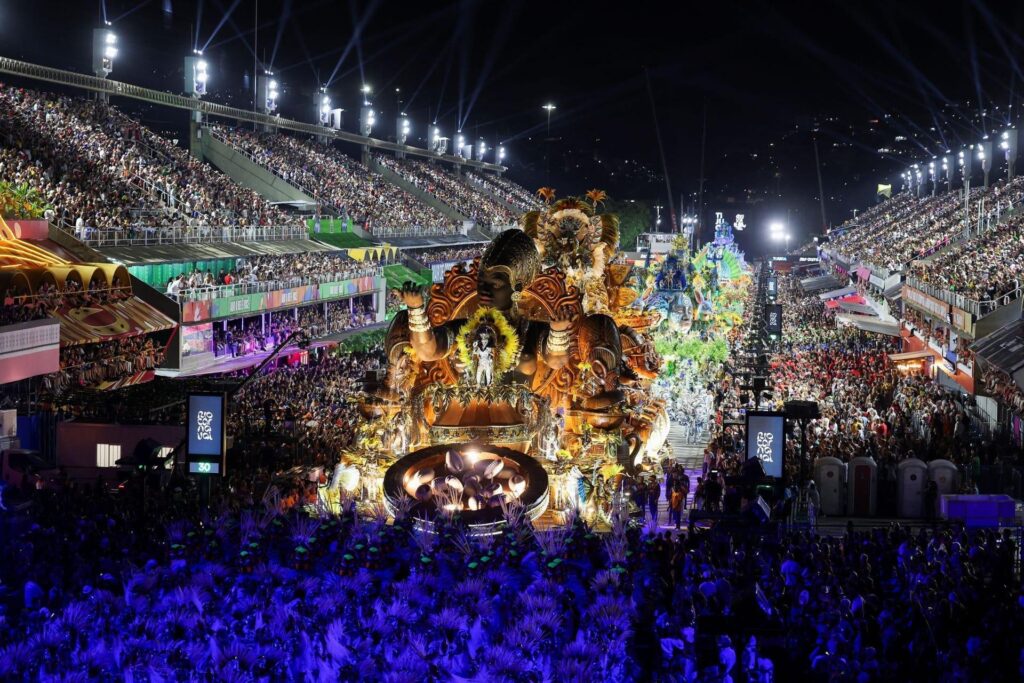
The Sambadrome parades — where samba schools compete over multiple nights — are the televised version. They’re spectacular and worth seeing once. But the street parties, called blocos, are where the city actually celebrates. Hundreds of them happen across different neighborhoods over two weeks. Some draw tens of thousands of people. Some are small enough that you’re essentially at a neighborhood block party.
The Bola Preta bloco in the Centro neighborhood consistently draws around two million people along its route. That number is not a typo. Being inside that crowd, with brass bands playing and confetti falling and people of every age and background dancing in the street, is genuinely unlike anything else.
What most first-timers get wrong: they try to see everything and exhaust themselves by day two. Pick two or three blocos per day maximum. Choose accommodation in Santa Teresa or Lapa if you want to be close to the action without being in the tourist hotel cluster. Book accommodation eight to twelve months out because prices triple and availability disappears fast.
Diwali in Jaipur or Varanasi, India
October or November depending on the lunar calendar.
Diwali happens across India simultaneously, which means you can experience it almost anywhere in the country. But the city you’re in shapes the experience completely.
Varanasi on the Ganges during Diwali, and particularly during Dev Deepawali which falls two weeks later, is something that deserves its own category. Thousands of oil lamps float down the river. Every ghat is lit. The smoke and the fire and the sound of prayers and music layered over each other in that ancient city — it’s the kind of scene that makes you feel like you’ve stepped into another century.
Jaipur offers a different version. The Pink City is illuminated, fireworks run from rooftops all night, families are everywhere, and the markets are packed with people buying sweets and gifts. It’s festive in a warmer, more domestic way — you feel invited into something rather than overwhelmed by it.
Travel tip worth knowing: book accommodation with a rooftop if you’re going anywhere in northern India for Diwali. Watching fireworks from ground level is chaotic. Watching from a rooftop with a clear view is extraordinary.
La Tomatina, Buñol, Spain
Last Wednesday of August every year.
Buñol is a small town about an hour from Valencia that most people would never visit for any other reason. For one hour on one Wednesday every August, roughly 20,000 people throw tomatoes at each other in the streets.
That’s the whole event. One hour. 150,000 kilograms of overripe tomatoes. And it is genuinely, absurdly fun in a way that makes no rational sense.
The tomato fight itself is chaotic and physical. People get knocked over. You will be covered head to toe in tomato pulp within the first two minutes. The crowd is dense. None of this sounds appealing when written down, but the collective laughter that runs through the crowd — the specific sound of tens of thousands of people all being ridiculous together — is one of the more joyful things I’ve witnessed.
Practical reality: wear old clothes and shoes you’ll throw away afterward. Bring goggles or sunglasses to protect your eyes from acidic pulp. The town fills up from early morning, so arrive well before the noon start time. After the fight ends, locals hose everything and everyone down in the streets.
The organizers now limit tickets to control the crowd size, so book months ahead through the official Tomatina website.
Holi in Vrindavan or Mathura, Uttar Pradesh, India
March, on the full moon.
Holi happens across India but its roots are in Uttar Pradesh, particularly in the towns of Vrindavan and Mathura where the festival has been celebrated for centuries longer than anywhere else.
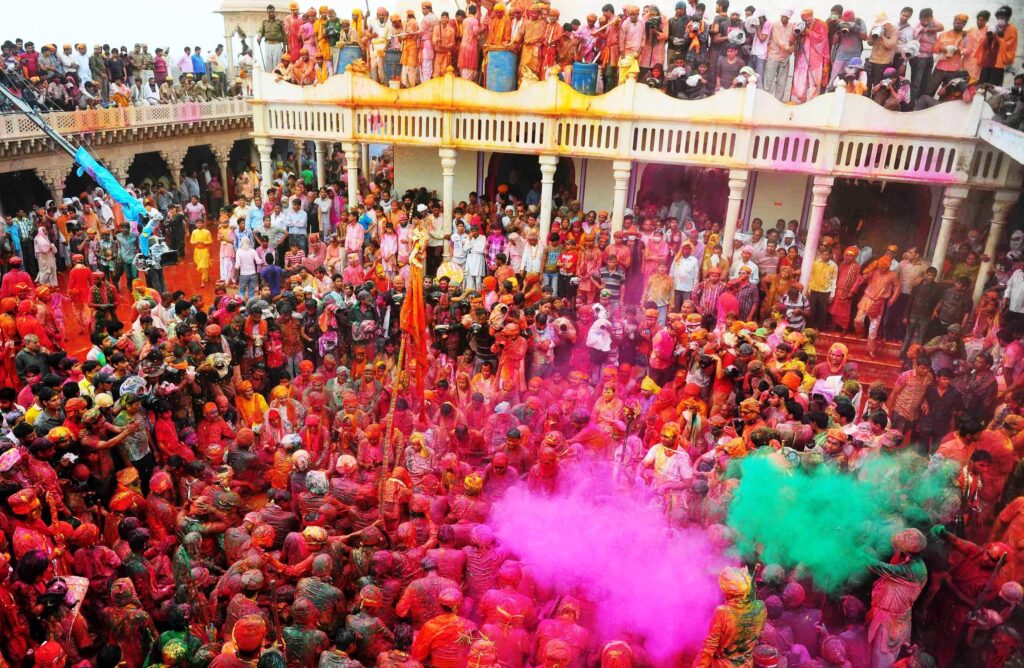
The Vrindavan version starts days before the official date and involves flower petals, then colored powder, then water. The Banke Bihari Temple celebrations are deeply religious and chaotic in a way that feels ancient. People are singing. Priests are throwing gulal — the colored powder — from the temple roof. The crowd moves as one organism.
Color-wise, accept that whatever you’re wearing is gone forever. Natural-colored powder washes off skin and hair within a day or two. Synthetic colors do not. Most experienced Holi participants apply coconut oil to their skin and hair before going out, which makes color removal significantly easier.
The emotional quality of Holi is different from every other festival on this list. There’s a warmth and playfulness to it that feels childlike in the best way. Age, background, and social status dissolve in a cloud of pink and orange powder. Strangers hug each other. People you’ve never met put color on your face and say “Happy Holi” with genuine delight.
Running of the Bulls, Pamplona, Spain
July 7th to 14th every year.
Back to where this article started.
The Running of the Bulls — or encierro — lasts about three minutes. Six bulls, several steers, and a few hundred runners cover roughly 825 meters through narrow streets from a holding pen to the bullring. It happens every morning at eight during the nine-day San Fermín festival.
Most people at San Fermín never run. The festival is far larger than the encierro. Concerts, fireworks, open-air dancing that goes until sunrise, the atmosphere of an entire city that has collectively decided to celebrate for nine days straight — this is the bulk of the experience.
The opening ceremony, the Chupinazo, is where the drums I mentioned at the beginning happen. A rocket is fired from the town hall balcony to officially open the festival. The crowd sprays sangria and champagne until everyone is soaked and red. Then the singing starts. It’s overwhelming in the best possible way.
If you do plan to run: attend a safety briefing beforehand, run on the later days when you’ve watched a few mornings and understand the flow, and stay toward the front of the pack rather than the back where bulls can catch runners who fall or slow down. The bulls move faster than most people expect.
Hotel rooms in Pamplona during San Fermín are booked a year in advance. Many people sleep in the park or arrive each day from Pamplona’s surrounding towns.
Songkran Water Festival, Chiang Mai, Thailand
April 13th to 15th every year.
Thai New Year is celebrated across Thailand, but Chiang Mai takes it to an extreme that makes everywhere else look restrained.
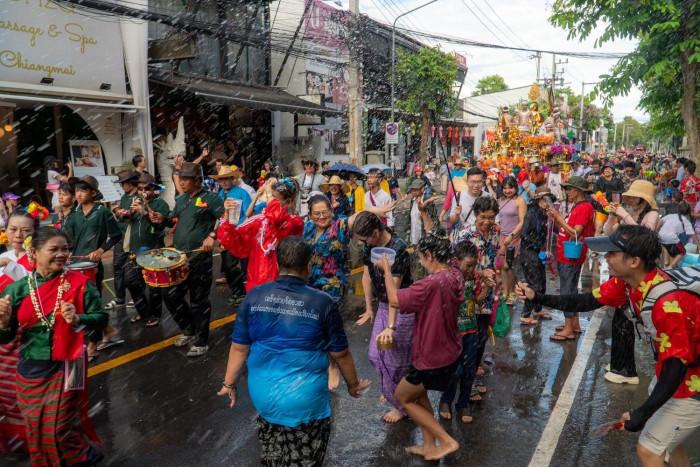
For three days, the city becomes a water battle. Streets are closed. Pickup trucks loaded with barrels of water cruise slowly while people throw buckets at them. Water guns, hoses, anything that holds liquid — it’s all deployed constantly. The old city moat becomes the center of the action with thousands of people lining the banks.
The heat in Chiang Mai in April is genuinely intense, which means the water feels wonderful. By midday you’ve been soaked and dried and soaked again multiple times. People are smiling at you constantly. There are no strangers during Songkran.
The traditional dimension of the festival involves gentle pouring of scented water over elders’ hands as a sign of respect — this happens alongside the chaos, particularly in temple areas. Seeing both versions of the same festival within the same hour gives you a sense of how these celebrations hold tradition and pure joy simultaneously.
Waterproof your phone completely before going anywhere. A dry bag or a waterproof phone case is not optional.
How to Actually Plan a Festival Trip
Most people discover they want to attend a specific festival after it’s already passed, book it in a panic for the following year, and then discover every accommodation option is either gone or priced at four times the normal rate.
Start Planning Much Earlier Than Feels Necessary
For major festivals like Rio Carnival, Pamplona, or any Indian festival during peak season, twelve months is not too early. Eight months is the minimum for decent options. Set a Google calendar reminder for the day after this year’s version ends — that’s when to book next year’s.
Google Flights calendar view lets you see price patterns across the whole month, which is useful for finding the cheapest arrival date around a festival. Hostelworld is worth checking for Pamplona specifically because private rooms in party hostels are sometimes the only affordable option and they book out fast.
Plan Your Accommodation Based on the Festival Geography
This matters more than people realize. A hotel that’s a forty-minute ride from the festival center forces you to leave early, miss the late atmosphere, and deal with transportation logistics when everything is already crowded and expensive.
Walk the festival route on Google Maps before booking. Find accommodation that’s either inside the festival area or a short walk from it. During Holi in Vrindavan, staying in the temple district versus staying outside the old town is the difference between being immersed and being a spectator.
Learn One Phrase in the Local Language
This is small but it changes your experience noticeably. “Happy Holi” in Hindi. “San Fermín!” shouted during the Pamplona revelry. “Sawadee Pi Mai” for Thai New Year. These phrases open doors and faces in a way that wearing a festival wristband never does. People respond to effort, even clumsy effort.
Go Slightly Off-Peak Within the Festival Period
Every major festival has a peak day when the maximum number of visitors arrive and a slightly quieter day when locals are still celebrating but the tourist crowd has thinned. For Diwali, the main night is the most crowded — the night before and after are often more intimate. For Carnival, the middle weekend blocos are more packed than the ones during the weekdays.
Mistakes That Make Festival Travel Frustrating
Overpacking is consistent across every festival trip. Songkran and Holi will soak you completely. La Tomatina will leave you covered in tomato pulp from head to toe. Expect to be on your feet for twelve hours straight at Carnival. Dragging a large suitcase through any of this is miserable. A backpack with three days of clothes that you’re not precious about is the right approach.
Trying to document everything instead of experiencing it is the specific modern version of arriving somewhere and not quite being there. Taking twenty minutes of video at the Sambadrome is twenty minutes of watching something on a small screen instead of watching it with your actual eyes. Take a few photos, put the phone in your pocket, and exist in the moment you paid for.
Underestimating the physical demand is common. Festivals involve standing for hours, walking much more than usual, often in heat or crowds, sometimes with disrupted sleep. Being in reasonable physical shape before you go and building in a rest day during the festival rather than trying to attend every single thing makes the experience sustainable.
Going alone and assuming you’ll figure it out is sometimes fine and sometimes lonely. Festivals are better with at least one person who is sharing the experience with you. If you’re traveling solo, look for festival-specific group tours that combine accommodation with organized access to events — GetYourGuide and Viator both have options for major festivals that are genuinely useful for first-timers.
What Stays With You After
The strange thing about festival memories is how physical they are. You don’t just remember what you saw — you remember what the air smelled like, what the crowd felt like pressing against you, the specific quality of the light at that hour.
Those sensory memories stay sharp for years. A particular song can put you back in a Carnival street in Rio with an immediacy that photographs never quite manage. The smell of incense still takes me back to Varanasi in a way that’s almost disorienting.
That’s the case for going. Not that festivals are educational or meaningful in an abstract sense, though they often are. But that they leave marks in your memory that ordinary travel rarely does. They give you reference points — before and after moments — that quietly rearrange how you understand other cultures and, in ways that are harder to explain, yourself.
The drums at Pamplona still wake me up sometimes when I’m half asleep. Not a nightmare. Just a memory that apparently decided it wasn’t done with me yet.
Worth every sleepless night and overpriced bocadillo.