
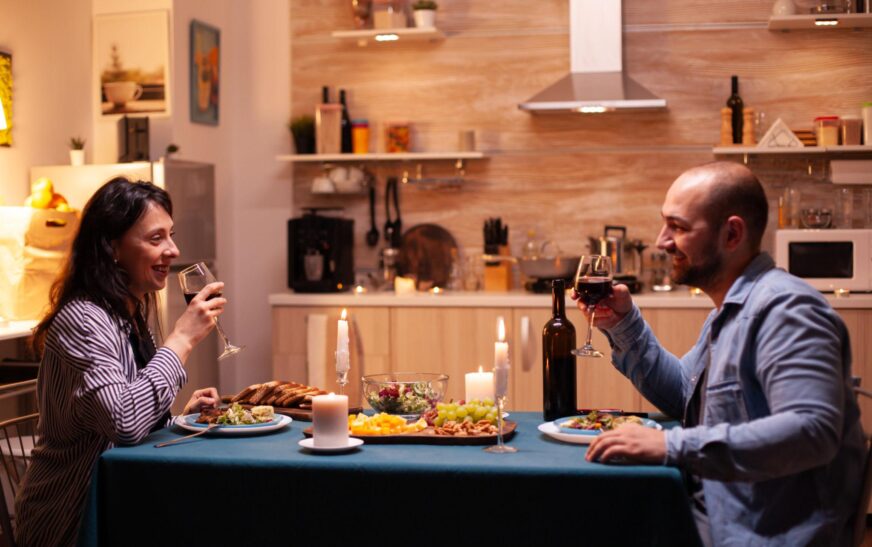
Our fifth anniversary fell on a year when we were both between jobs, broke in that specific way where you’re checking your bank balance before buying coffee. I remember feeling genuinely embarrassed that I couldn’t book the nice dinner we’d done the year before, like somehow a cheaper celebration meant we cared less.
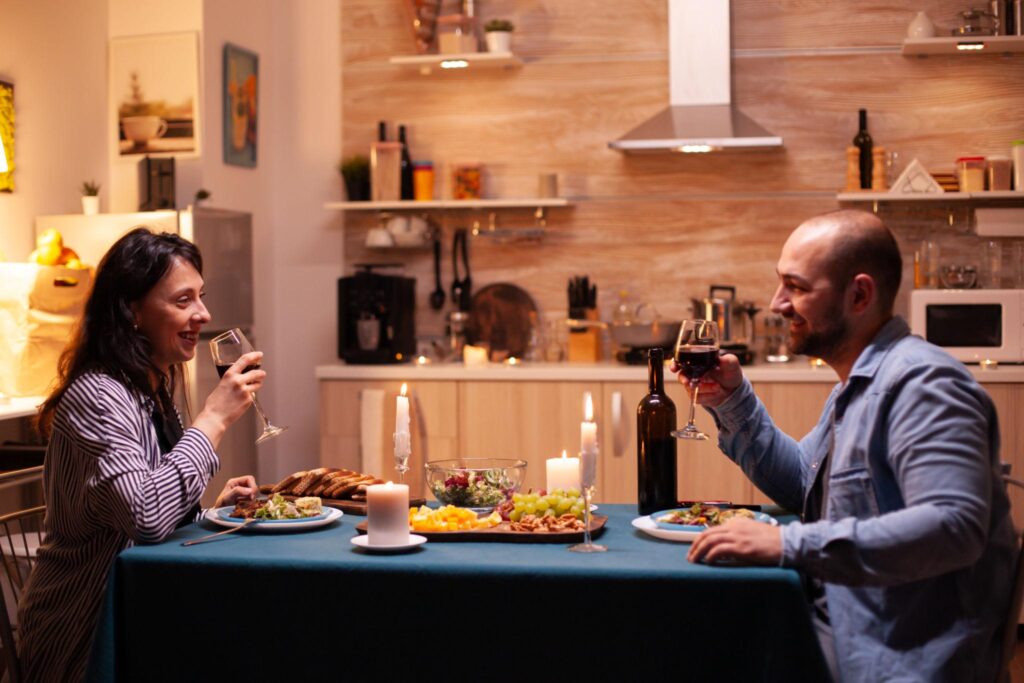
So instead we did something almost stupidly simple. We drove twenty minutes to a lookout point we’d been to on our first date, brought a six dollar bottle of wine and some cheese from the grocery store, and sat on the hood of the car watching the sun go down. Total cost was maybe fifteen dollars.
It’s still the anniversary we talk about most, five years later. Not the nice dinners, not the one trip we splurged on, that random night on the hood of the car with grocery store cheese.
That experience kind of rewired how I think about anniversaries now. The budget was never really the thing that made past celebrations good or bad, it was whether the day actually felt like it was about us specifically, rather than just executing some generic “nice night out” template.
Why Expensive Doesn’t Automatically Mean Memorable
I’ve noticed a pattern looking back over a decade of anniversaries together. The ones I remember clearly aren’t sorted by how much they cost, they’re sorted by how specific they felt to our actual relationship.
A fancy restaurant is a fine night out, but it’s also exactly the same fancy night out that thousands of other couples are having at their own version of that restaurant on their own anniversary. There’s nothing wrong with that, but it’s also not inherently more meaningful just because it costs more.
What actually sticks tends to be something tied to an inside joke, a memory, or something neither of you has done before. None of those things require much money. They require thought.
Step 1: Figure Out What You’re Actually Celebrating
This sounds obvious but most people skip it. Before planning anything, it helps to ask what you actually want the day to feel like, not what an anniversary is “supposed” to look like.
Some years we’ve wanted a quiet, low-key night because life had been chaotic and we just wanted calm. Other years we wanted an adventure, something active and a little out of our routine. Treating every anniversary like it needs the same formula, fancy dinner, fancy outfit, is part of what makes some of them forgettable. Ask what this specific year actually calls for.
Step 2: Revisit Something From Your Actual History
This has become our most reliable trick, and it costs basically nothing. Go back to the first date spot, the place you had your first real fight and made up, the apartment parking lot where he proposed, whatever holds actual history for your specific relationship.
We’ve done this with our first date lookout point twice now, and a cheap diner where we used to go after late shifts early in our relationship. Neither requires a reservation or a big budget, but both hit differently than a generic nice restaurant because the place itself is already loaded with meaning.
Step 3: Build the Day Around an Activity, Not Just a Meal
A meal is fine, but a meal is also basically the default setting for “special occasion,” which means it doesn’t automatically feel distinct from a birthday or a random date night.
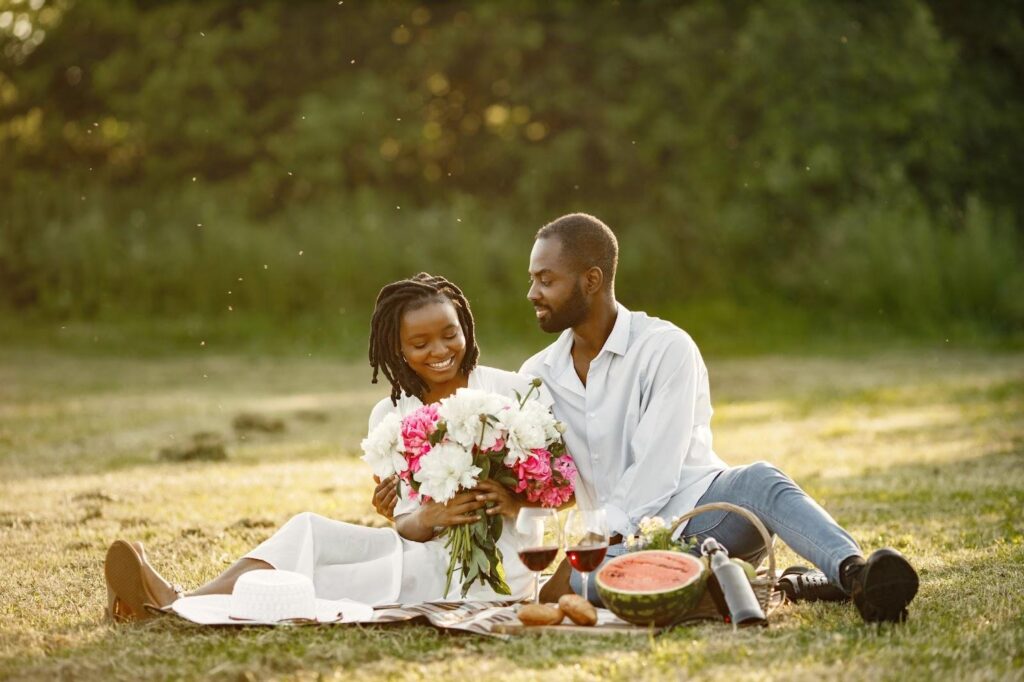
Some low-cost activity ideas that have worked well for us over the years: cooking the meal from our wedding menu together at home instead of going out, which took some recipe hunting but cost a fraction of what the actual wedding catering did. A scavenger hunt I set up around our city with stops at meaningful locations, ending at a park bench where we had an early date. Renting a tandem bike for an hour, which sounds gimmicky but turned into one of the more genuinely funny afternoons we’ve had as a couple.
The common thread isn’t the specific activity, it’s that we were doing something together instead of just sitting across a table making conversation, which can start to feel like work after enough years together.
Step 4: Write Something, Even If You’re Not a “Writer”
This one feels almost too simple to mention but it’s consistently the part of low-budget anniversaries that lands hardest. A letter, even a short one, about a specific memory or something you appreciate that you don’t say often enough, costs nothing and tends to mean more than most gifts we’ve actually purchased.
I’m not naturally a writer and the first one I wrote felt awkward and stiff. It didn’t matter. The fact that I’d sat down and put thought into specific memories instead of buying something generic mattered more than how polished the writing was.
Step 5: If You Do Want to Spend Money, Spend It on Experience Over Stuff
Some years we’ve had more room in the budget, and what’s actually been worth spending on, based on which anniversaries we remember fondly versus which ones blur together, is experiences rather than objects.
A cooking class together. A weekend trip somewhere we’d never been, even somewhere close and unglamorous. Tickets to something neither of us would normally go to alone. These tend to generate actual memories and conversation, where a nice gift, however thoughtful, mostly just sits on a shelf afterward.
Real Examples Across a Range of Budgets
For a near-zero budget anniversary, recreate your first date as closely as possible, same order at the same place if it still exists, same activity. Write a letter. Watch the movie from that first date again.
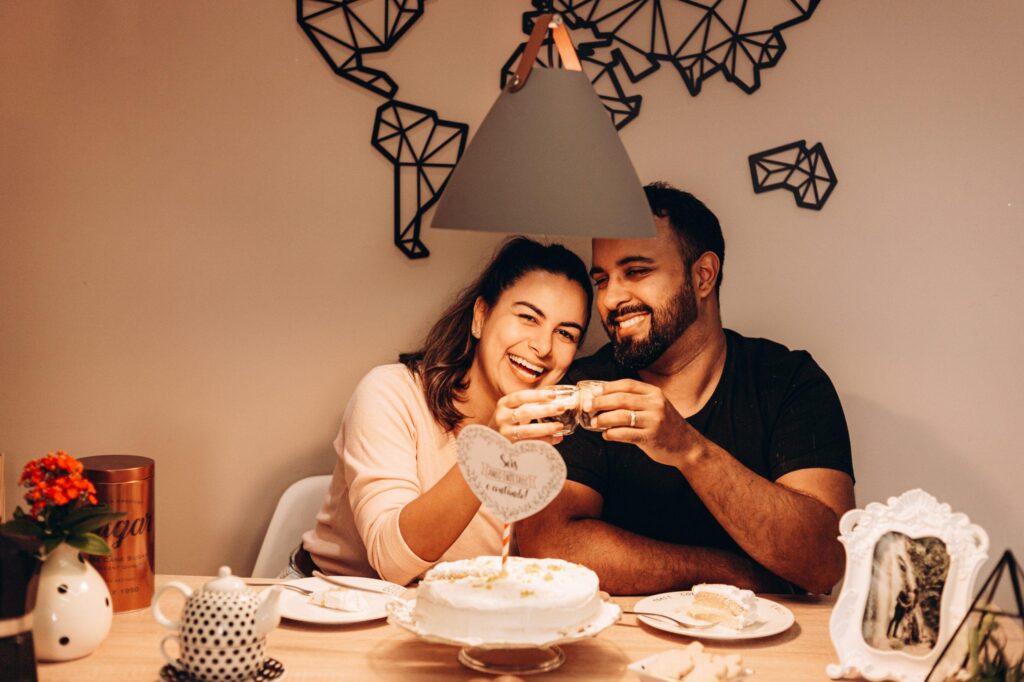
For a modest budget, maybe fifty to a hundred dollars, try a scavenger hunt through meaningful locations ending somewhere with a view, paired with takeout from a place that means something to you both, eaten somewhere other than your kitchen table, a park, a rooftop, your own backyard with actual plates instead of takeout containers.
For a bigger budget, a weekend trip works well, but pick somewhere with a personal connection rather than just the most popular destination, somewhere you talked about going early in the relationship and never got around to, or somewhere tied to a shared interest.
Step by Step: Planning It Without Last-Minute Stress
Start at least two to three weeks out, even for something simple. Most disappointing celebrations come from scrambling the day before and settling for whatever’s available.
Pick one anchor activity first, the dinner, the trip, the scavenger hunt, before filling in details around it. Trying to plan everything at once tends to lead to overcomplicating it.
If a reservation or rental is involved, book it early. We learned this one the hard way when a tandem bike rental was booked solid for our actual anniversary date and we ended up doing it the following weekend instead, which was fine but not quite the same.
Build in one small surprise element even within a simple plan, a card hidden somewhere, a song queued up, a small handwritten note left in an unexpected spot. These cost nothing but add a layer of “this was planned for you specifically” that a standard dinner reservation doesn’t really have.
Leave room for the day to be imperfect. Some of our best anniversaries have included a wrong turn, a closed restaurant we had to pivot from, or weather that ruined the original plan. The pivot itself often becomes part of the story later.
Common Mistakes to Avoid
Tying the celebration’s worth to its cost. This was my mistake in that broke fifth-anniversary year, assuming a fifteen dollar night somehow meant we cared less. It didn’t, and looking back it’s obvious that wasn’t true at all.
Defaulting to the same formula every year. Dinner reservations are fine occasionally, but doing the identical thing every single year eventually makes the day blur together instead of standing out as its own memory.
Overplanning to the point of stress. A celebration that requires so much coordination that one of you is frazzled and exhausted by the actual day defeats the purpose. Simpler plans executed calmly tend to beat elaborate plans executed in a panic.
Forgetting to actually talk during the day. It’s easy to get caught up in the logistics of an activity and forget the actual point is connecting with each other. Build in unstructured time, not just a packed itinerary.
Comparing your celebration to what you see online. Elaborate proposal-style anniversary posts online represent a tiny, curated slice of what most actual relationships look like day to day. They’re not a fair benchmark for what your own celebration needs to look like.
Final Thoughts
That fifteen dollar night on the hood of the car taught me something I keep relearning every year, the budget was never really the variable that mattered. What mattered was whether the day felt specifically like us, built around our actual history and what we actually enjoy, instead of a generic template of what an anniversary is supposed to look like.
If you’re planning one on a tight budget this year, don’t think of it as a lesser version of a celebration. Think of it as a chance to do something more personal than money usually buys anyway. Revisit somewhere meaningful, write something honest, build the day around doing something together instead of just sitting across a table. That’s genuinely most of what’s made ours memorable, regardless of what the budget happened to be that year.
Traditional Comfort Food Recipes Passed Down Through Generations
My grandmother never wrote down her chicken and dumplings recipe. Not once, not ever, in eighty some years of making it. When she passed, I genuinely panicked, thinking that recipe had just disappeared with her, because she’d always cooked by feel, a pinch of this, enough buttermilk “until it looks right,” dumplings dropped in “when the broth sounds ready.”
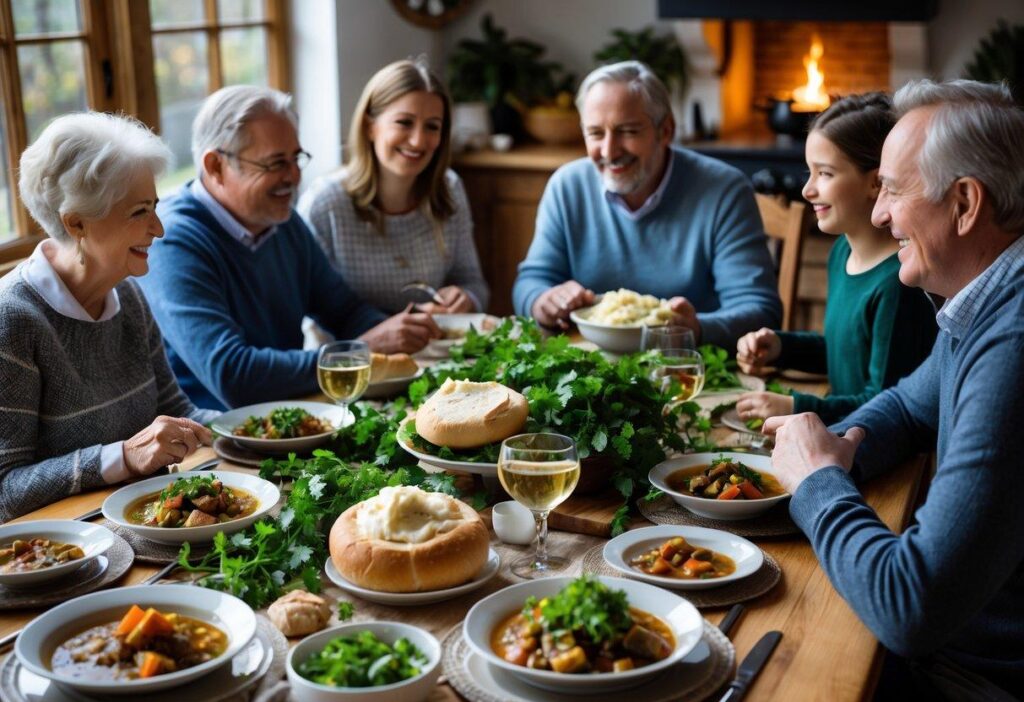
It took me three failed attempts and a long phone call with my aunt, who’d apparently watched grandma make it dozens of times and absorbed more than she realized, before I got something close. Not identical. Close. And somehow that imperfect version, cooked from memory and guesswork instead of a printed card, ended up meaning more to our family than if I’d found a perfectly written recipe in a drawer somewhere.
That experience changed how I think about family recipes entirely. They’re not really about precision, they’re about preserving something that would otherwise just vanish. Since then I’ve gotten serious about actually capturing the recipes still living in my family’s collective memory before they’re gone the same way grandma’s exact method nearly was.
Why “Passed Down” Recipes Are Almost Never Written Down Properly
This was the first thing I had to accept. The generation that actually knows these recipes by heart usually never measured anything precisely, because they learned by watching, not by reading instructions. Asking my grandmother for exact measurements used to genuinely confuse her. She’d just shrug and say “you’ll know when it’s right.”
That’s frustrating if you’re trying to replicate something exactly, but it also tells you something important. These recipes were taught through repetition and presence, not documentation. If you want to actually preserve one, you usually have to cook alongside someone who knows it, not just ask for a written recipe that may not even fully exist in their head as numbers.
Step 1: Cook With the Person, Not Just Interview Them
This is the single biggest lesson I learned the hard way. I tried interviewing my aunt over the phone first, asking her to describe my grandmother’s biscuit recipe step by step. It went nowhere. She kept saying things like “you cut the butter in until it looks crumbly” without being able to translate that into actual amounts.
What worked was standing in her kitchen while she made them, watching her hands, asking her to narrate what she was doing in real time, and writing down what I observed rather than just what she said. The “crumbly” thing made instant sense once I saw the actual texture she was going for.
If you have access to the person who knows the recipe, cook with them in person if at all possible. It’s a completely different process than a phone interview.
Step 2: Measure Everything the First Time, Even If They Don’t
The person who’s made a dish two hundred times doesn’t need measuring cups anymore. You do, at least for documentation purposes.
I bought a kitchen scale and a set of measuring cups specifically for this project and used them obsessively the first time I cooked alongside a family member, even when they were eyeballing everything. When my aunt added “a handful” of flour to thicken the gravy, I measured what came out of her hand into a cup afterward. It felt a little silly in the moment, but it’s the only way to actually translate “feel” into something repeatable later.
Step 3: Write Down the Sensory Cues, Not Just the Steps
A lot of what makes these recipes work isn’t measurements at all, it’s knowing what something should look, smell, or sound like at each stage. My grandmother’s dumpling broth had a specific sound when it was ready, a particular kind of rolling simmer, not a hard boil.
Now when I document a family recipe, I write down both the measurable stuff and the sensory stuff. “Cook until the onions are translucent and starting to smell sweet rather than sharp” tells you more than a specific number of minutes, since stove heat varies so much between kitchens anyway.
Step 4: Make It Multiple Times Before Considering It “Documented”
The first attempt is never the final version. My chicken and dumplings took three tries before it tasted like what I remembered, and even then it wasn’t identical, it was close enough that it brought my dad to tears the first time he ate it, which told me I’d gotten the important parts right even if it wasn’t a perfect replica.
I’d recommend cooking a newly documented family recipe at least three times, adjusting the written version each time based on what actually happened versus what you expected. Recipes that come from memory rather than precise documentation almost always need this kind of refinement pass.
Step 5: Record the Stories Along With the Recipe
This part surprised me with how much it mattered. The recipe itself is only part of what makes these dishes feel significant. My grandmother’s chicken and dumplings recipe came from her own mother, made during a particularly hard winter when chicken was one of the only proteins they could reliably afford, and dumplings stretched the meal further to feed more people.
Knowing that story changes how the dish feels when I make it now. I started keeping a simple document, just a Google Doc shared with family, with each recipe alongside whatever story or context exists around it. Who taught it to whom, what occasion it was usually made for, any specific memory tied to it. The recipe without the story is just instructions. With the story, it’s actually preserving something.
A Few Recipes That Tend to Show Up Across Many Families
While every family’s specific version differs, certain categories of comfort food show up again and again as the dishes most likely to get passed down through generations, which is worth knowing if you’re trying to figure out where to start documenting your own family’s history.
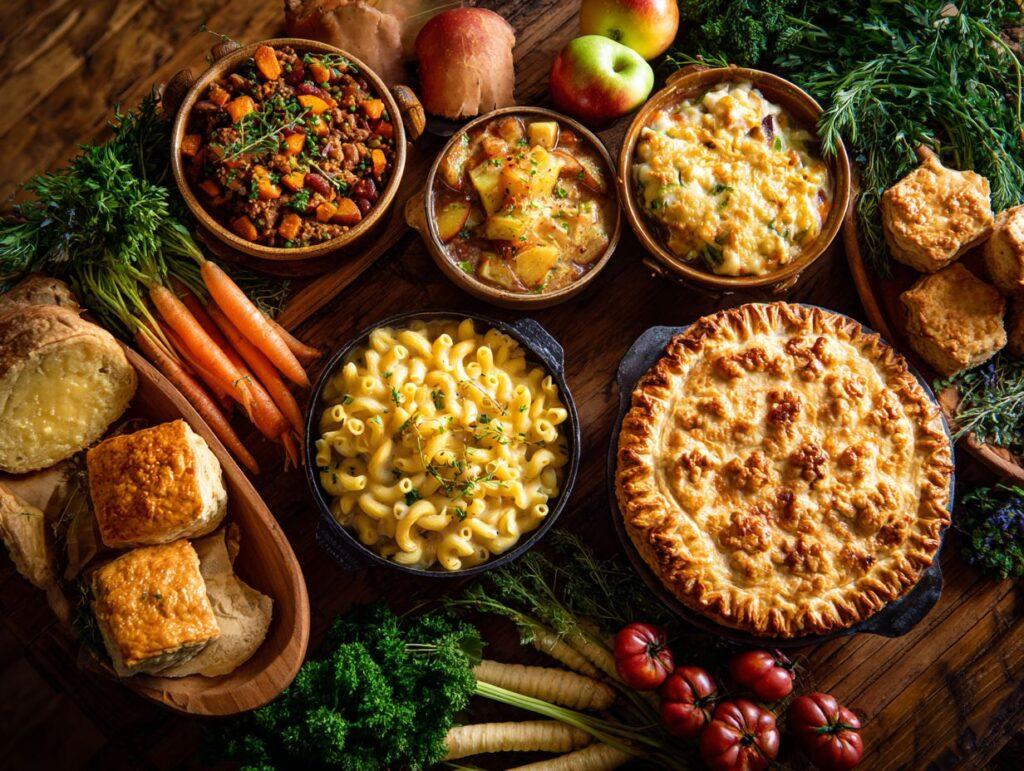
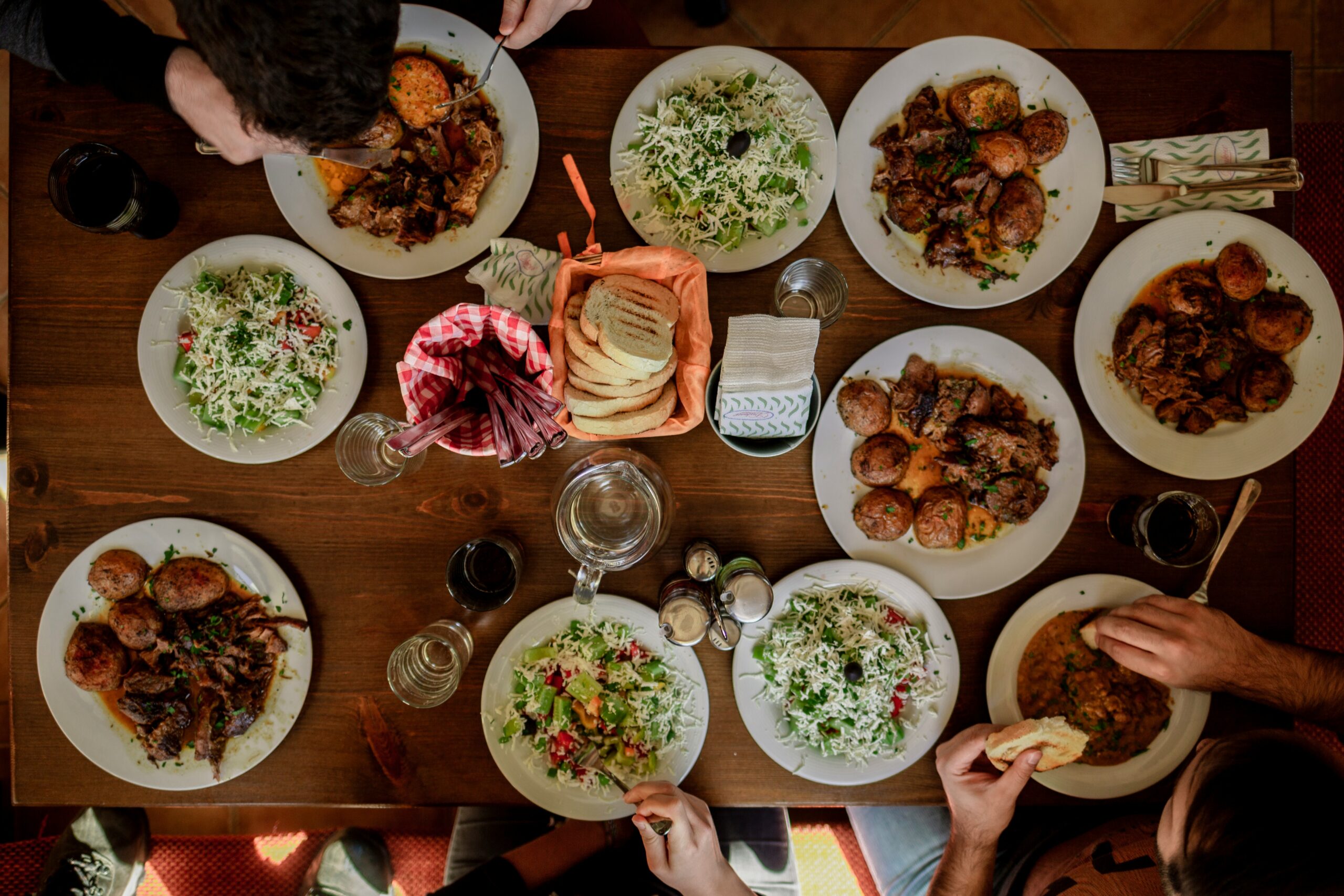
Slow-braised meat dishes, pot roasts, stews, and braises that simmer for hours, tend to be heavily passed down because they were often built around stretching cheaper cuts of meat to feed a family, and the long cooking time meant a lot of inherited technique around timing and seasoning.
Bread and baked goods, biscuits, cornbread, specific pie crusts, get passed down constantly because the technique, particularly things like how you handle the dough, is almost impossible to convey without hands-on demonstration, which makes them especially worth documenting while you still have access to someone who can show you in person.
Soups and broths often carry the most family history because they were frequently the dish made with whatever was on hand, which means the specific version your family makes reflects actual economic and regional history, not just taste preference.
Step by Step: Starting Your Own Family Recipe Project
If you want to do this with your own family, here’s roughly how I’d suggest approaching it.
Start with whoever in your family is oldest and most willing, not necessarily the dish you most want to save first. Recipes can wait a little if needed, people sometimes can’t.
Pick one recipe to start with rather than trying to document everything at once. I made the mistake of trying to capture five recipes during one visit to my aunt and ended up with messy, incomplete notes on all of them instead of one solid one.
Bring a notebook or your phone and actually cook alongside them, measuring as you go even if they’re not. Take photos of each stage, not just the final dish, since the visual cues matter as much as the written ones.
Ask about the story behind the dish specifically, not just the technique. Who taught them, what occasion it was for, any memory attached to it.
Cook it yourself afterward, ideally within a week or two while it’s fresh in your memory, and adjust your notes based on what actually happened.
Common Mistakes to Avoid
Waiting too long to start. I genuinely thought I had more time before my grandmother passed. Family recipes don’t wait for a convenient moment, if there’s someone who holds this knowledge, the best time to start documenting is now, not eventually.
Trying to make it perfectly precise on the first attempt. These recipes were never built around precision, forcing exact measurements onto something that was always taught through feel can actually strip away what made it work in the first place.
Skipping the story. A recipe without context is just a set of instructions. The story is usually what makes people actually want to keep making it.
Only writing down what they say, not what you observe. People who’ve cooked something for decades often describe their own process inaccurately without realizing it, because parts of it have become so automatic they don’t even register as steps anymore. Watching matters more than just listening.
Treating it as a one-time project instead of an ongoing one. Recipes get refined over multiple attempts. Don’t expect to nail it the first time and don’t be discouraged when the first version isn’t quite right.
Final Thoughts
That panic I felt after my grandmother passed, thinking her chicken and dumplings recipe was just gone, turned out to be the push I needed to actually start preserving the rest of what’s still living in my family’s memory instead of assuming it would always be there. It wasn’t, and that’s the lesson that stuck with me hardest.
If there’s a dish in your family that exists mostly in someone’s hands and head rather than on paper, that’s worth treating as more urgent than it probably feels right now. Cook alongside them if you can. Write down more than just the ingredients. The recipe matters, but it’s really the story and the connection that makes it worth saving in the first place.