

Protecting Family Time When Work Never Slows Down
On a Tuesday evening, my son asked me to play Legos with him. I said “in a minute” while I finished an email. Forty minutes later, he’d built a whole rocket on his own and wandered off to find his sister instead. That’s how it goes sometimes. “A minute” turned into the entire window I had.

It wasn’t a big moment. He wasn’t upset about it, he just moved on the way kids do. But it stuck with me, because I knew this had been happening more than I wanted to admit. Work kept sliding into the exact moments that were supposed to be family time, a few minutes at a time.
That Tuesday is what finally pushed me to stop treating this as something that would sort itself out once work calmed down. It doesn’t calm down. There’s always another email, another deadline, another excuse that sounds reasonable enough in the moment. The real fix wasn’t finding more time. It was protecting the time I already had.
Why “I’ll Make Time When Things Slow Down” Doesn’t Work
I told myself this for years. Once this busy stretch passed, things would even out and family time would naturally get bigger. Looking back, that quiet stretch never showed up. There was always a new project, another packed season, one more reason it wasn’t quite the right week.
What actually moved the needle wasn’t waiting for things to slow down. It was deciding family time deserved the same protection as a work meeting, scheduled and defended, instead of whatever was left over after everything else.
Step 1: Get Specific About What Family Time Actually Means
This sounds obvious, but I skipped it for years. I used to think of family time as a vague goal, “spend more time together,” without ever pinning down what that meant day to day. Vague goals are easy to push aside because there’s nothing concrete you’re actually missing.

Once I got specific, dinner together most nights, fifteen minutes alone with each kid, one weekend day without errands, I could tell right away when something had slipped, instead of just feeling vaguely bad about it. That made it a lot harder to let it quietly disappear.
Step 2: Schedule Family Time Like a Real Meeting
It felt odd at first, putting time with my own kids on a calendar like a work appointment. But here’s the thing: whatever doesn’t get a block on your calendar is exactly what gets bumped the moment something else comes up.
I now have a recurring evening block in Google Calendar, color coded and labeled “family” so it’s easy to spot next to my work blocks. It sounds small, but seeing it sitting there like a client call has made me protect it in a way good intentions never did.
Step 3: Be Present, Not Just Available
This was a bigger shift than I expected. For years I figured I was doing fine because I was usually home in the evenings. But sitting in the living room with my laptop open and my phone buzzing isn’t presence. It’s just being reachable from a different room.
Now, during family time, the phone goes in another room and the laptop stays shut. The first week felt strangely uncomfortable, which told me how used to being constantly reachable I’d gotten. By the second week it felt normal, and my kids noticed the change before I ever said anything about it.
Step 4: Small Windows Matter Too
I used to wait for a free weekend to do “real” parenting, which meant a lot of connection got lost during the week, when it never felt like quite enough. That backfired, because big free weekends are rare and weekdays make up most of the calendar.
Now the small stuff counts. Ten minutes of actually listening before bed instead of rushing through it while thinking about tomorrow. A screen-free car ride to school. Helping with homework while also asking how their day went, not just checking the answers. None of it needs a cleared weekend. It takes ten or fifteen minutes, and it happens regularly.
Step 5: Get Specific With Your Partner About Who’s Doing What
A lot of what was eating into our family time wasn’t really about a lack of time at all. It was logistics slipping through the cracks, with one of us assuming the other had it covered. We started a shared note on our phones, an ongoing list of pickups, appointments, and who’s making dinner, so neither of us is carrying all of it in our head alone.
It sounds like a small, boring fix, but it freed up a surprising amount of mental space. A lot of what was crowding out real connection wasn’t work itself. It was logistics neither of us had actually said out loud.
What a Normal Week Looks Like Now
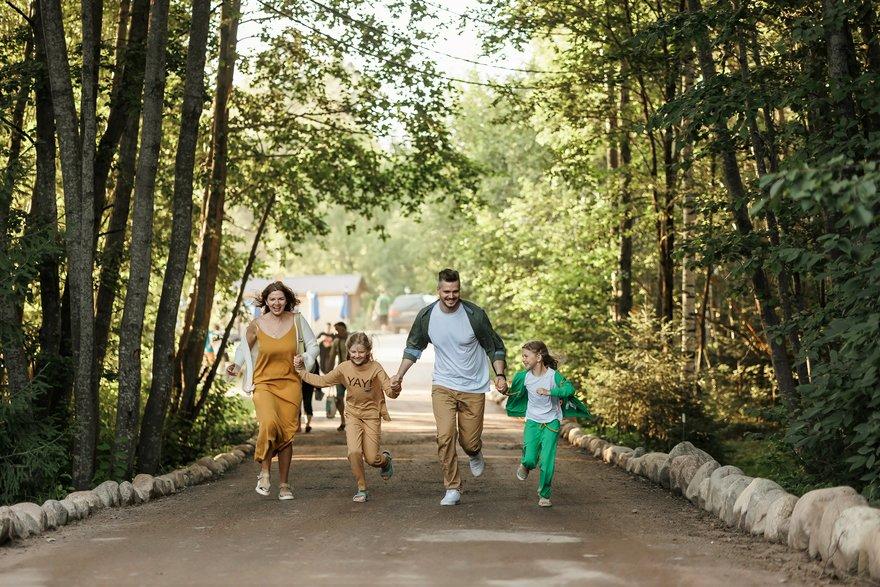
Most weeknights we have a phone-free dinner, simple or rushed, doesn’t matter which. There’s an hour of screen-free car time to and from school. Fifteen minutes of focused attention with each kid sometime in the evening, even if it’s just a puzzle or talking while doing dishes. Weekends include one planned activity together: eating out, the park, anything that isn’t errands.
It’s not perfect. Some weeks something genuinely urgent breaks the calendar block. But having it as the default that has to be actively cancelled, instead of something I have to build from nothing every day, has made the biggest difference.
How to Start Building Your Own System
If your schedule is chipping away at family time the way mine was, here’s roughly where I’d start.
Define what family time actually looks like for your family. Concrete, repeatable blocks, not a vague goal. Dinner, bedtime, a weekend activity, whatever fits your life.
Put it on a calendar, ideally one you already use for work, so you’re more likely to protect it the way you’d protect a meeting that’s hard to reschedule.
Put your phone and laptop away during that block, not just on silent, but out of the room. A phone sitting face up nearby still pulls at your attention even when it’s not buzzing.
Don’t wait only for the big windows. A car ride, bedtime, homework help, these are more reliable than hoping for a free weekend.
Talk logistics with your partner directly, not as a quality-time conversation. Most of the stress draining family time comes from unclear roles, not a lack of love or effort.
Common Mistakes to Avoid
Treating family time as whatever’s left over. If it only happens in the gaps, it shrinks as other demands grow. It needs its own protected space.
Waiting for a slower season that may never come. I spent years waiting for things to calm down before taking this seriously. Busy seasons tend to get followed by more busy seasons.
Confusing being home with being present. Physical presence isn’t the same as real attention, and kids notice the difference even when they can’t put it into words.
Only valuing the big, planned moments. If you’re waiting for a trip or a special outing, you miss the small, repeatable moments that actually build connection over time.
Not communicating clearly with your partner about logistics. Unclear expectations about who’s doing what quietly drain the time and energy that should go toward family.
Final Thoughts
It wasn’t a big wake-up call, just those Legos on a Tuesday, and that’s exactly why it stuck. It was small and ordinary enough to reflect all the other small, ordinary moments that had been slipping by unnoticed.
None of the changes we made were complicated. It came down to treating family time as something worth protecting, not just something nice to do if there’s room. Block it like an appointment. Count the small windows, not just the big ones. If your schedule is wearing down your family time the way mine was, start with one thing, a screen-free car ride or a phone-free dinner, and build from there. The difference tends to be bigger than people expect.
New Year’s Eve Celebration Ideas for an Unforgettable Night
Three years ago, my New Year’s Eve plan fell apart at 6 p.m. The restaurant we’d booked called to say their kitchen had a gas issue and they were closing early. Every other decent place nearby was either fully booked or charging triple for a “special NYE menu” that was really just their regular menu with a fancier name. We ended up at home, ordering pizza, and honestly, it turned into one of the best New Year’s Eves I’ve had.

That night taught me something I didn’t expect: the best celebrations aren’t about how much you spend or how fancy the venue is. They’re about actually planning something you’ll enjoy, instead of defaulting to whatever everyone else seems to be doing.
So this isn’t a generic “top 10 party ideas” list. It’s what’s actually worked, what’s flopped, and what I’d tell a friend who texted me on December 28th asking “what should we even do this year?”
Figure Out What Kind of Night You Actually Want First
Before picking an idea, it helps to be honest about what you actually enjoy, not what looks good on Instagram. I’ve been to huge rooftop parties that felt exhausting by 11 p.m., and tiny dinners with four people that felt better than any club night ever did.
Ask yourself a few quick questions: Do you want to be around a big crowd, or would you rather have a smaller, calmer night? Are you trying to impress someone, relax after a hard year, or just have fun with people you already love? Is budget tight, or are you fine spending a bit more for the right experience?
Once you’re clear on that, picking an idea gets a lot easier. Here’s what’s worked well across different moods and budgets.
Host a Small Dinner Party (Without Losing Your Mind)
This is probably the idea I recommend most, because it scales. You can do it for four people or fourteen.
The mistake I made the first time I hosted was trying to cook everything myself, a full multi-course meal, while also trying to be a good host and enjoy my own party. By 9 p.m. I was exhausted and slightly resentful, which is not the vibe you want walking into midnight.
What actually works is potluck-style hosting. You handle the main dish and drinks, and ask each guest to bring one thing, an appetizer, a dessert, a specific side. Apps like Partiful or even a simple shared Google Doc make this easy to coordinate without forty texts back and forth.
Step by step, here’s how I’d plan it now:
Pick a theme that’s loose enough to be fun but not so specific it becomes a costume requirement. “Comfort food and cocktails” or “international tapas night” both work well and give people something to plan around.

Send invites about two weeks out. Any earlier and people forget, any later and their calendars are already full.
Plan your music ahead of time instead of scrambling at 11:45. A pre-made Spotify playlist that builds energy toward midnight saves you from awkward silence or, worse, someone’s questionable shuffle choices.
Set a countdown reminder. Sounds obvious, but I’ve genuinely been at parties where everyone missed the actual midnight moment because no one was watching the clock. Alexa, Google Home, or just someone’s phone timer works fine.
Try a Themed Game Night Instead of a Traditional Party
This one surprised me. A friend hosted a “decade-themed” game night a couple years back, everyone dressed from a random decade (we drew slips of paper), and we played a mix of trivia and party games like Codenames and a homemade “guess the year” music quiz using Spotify playlists from different eras. It sounds simple, but it ended up being one of the most talked-about parties any of us had been to. People who normally feel awkward at big parties were way more relaxed because there was always something to do, you weren’t just standing around making small talk.
If you want to try this, a few tools make it easier. Jackbox Games works great if you’ve got a TV and don’t mind a slightly more screen-heavy night. For something more old-school, a deck of cards, a few board games, and a playlist app is honestly all you need.
Go Somewhere With a View, But Book Early
If you do want to go out, fireworks and skyline views are hard to beat, but the planning window matters more than people realize.
I learned this the hard way trying to book a rooftop bar on December 27th one year. Everything decent was sold out, and what was left wanted a $150 minimum spend just to walk in the door. The following year, I booked the same type of venue in early December and paid less than half that.
If a view matters to you, start checking availability by the first week of December. Apps like OpenTable, Resy, or even just calling venues directly usually get you better information than relying on what shows up in a random Google search.
Also worth checking: a lot of cities have free public fireworks displays that rival the paid rooftop experience. Bringing a thermos of something warm and finding a good public spot can genuinely beat paying a cover charge.
Plan a Quiet Night In, On Purpose
Not every New Year’s Eve needs to be a “celebration” in the traditional sense. Some of my favorite ones have been deliberately low-key, comfort food, a favorite movie, and being asleep before 1 a.m. The key word there is deliberately. There’s a difference between a quiet night because nothing else worked out, and a quiet night you actually chose. The second one feels good. The first one can feel like you’re missing out, even if you’re not.
If you’re planning this kind of night, a few things make it feel more intentional rather than like a fallback plan. Cook something you wouldn’t normally make on a regular Tuesday, even if it’s simple. Light candles, put on a playlist, make it feel different from any other night in. Watch the countdown somewhere, even if it’s just pulling up a livestream from Times Square or your local city’s broadcast, so midnight still feels like a moment, not just another hour passing.
Real Example: How a Mixed Group Made It Work
A few years back, my partner and I hosted a New Year’s Eve for a group that genuinely had nothing in common preference-wise. Some people wanted to go out dancing, some wanted a quiet dinner, a couple of people had young kids and needed to be home by 10. Instead of trying to pick one option, we did a two-part night. Dinner at our place from 7 to 9:30, full meal, relaxed conversation, so the parents with kids could leave right after dinner and still feel like they’d celebrated. Then, for whoever wanted to keep going, we moved to a bar a few blocks away that had a later, more high-energy vibe for the countdown itself. It split exactly down the middle, half the group went home happy after dinner, half of us stayed out till 1 a.m. Nobody felt like they missed out on what they actually wanted, and nobody felt pressured to stay for something they weren’t into. If you’re hosting for a group with different energy levels, building in a natural exit point can solve a lot of stress.

Mistakes I’d Avoid Next Time (and Ones I Already Have)
Overpromising on the menu. The year I tried to make a five-course meal solo, two dishes came out late and one didn’t come out at all. Pick two or three dishes you can actually execute well instead of trying to impress with quantity.
Not confirming reservations close to the date. Restaurants get overwhelmed on NYE, and confirmations sometimes get lost in the shuffle. A quick call the day before saves you from showing up to a table that “doesn’t exist in our system.”
Assuming everyone wants to stay out late. Some of my best nights ended around 11:30 because half the group was tired, and that’s fine. Don’t build a night around an assumption that everyone wants the same thing you do.
Forgetting non-drinkers in the plan. A night built entirely around alcohol can leave people who don’t drink feeling like an afterthought. Having a couple of genuinely good non-alcoholic options, not just soda, makes a real difference. Mocktail recipes are easy to find, and even just sparkling cider in a nice glass goes a long way.
Not having a backup plan for weather. If any part of your night is outdoors, fireworks viewing, a rooftop, check the forecast a few days out and have a plan B. I’ve been caught in surprise rain with zero shelter more than once.
A Few Smaller Ideas Worth Trying
Not every great New Year’s idea needs to be a full event. A few smaller ones that have worked well:
A “resolution swap” where everyone writes their goal for the year on a card, seals it, and you mail them back to each other at the end of the year. It’s a small thing, but it adds a layer of meaning to the night that goes beyond just the party itself.
A photo booth corner using nothing more than a plain wall, some string lights, and a phone on a tripod. Apps like Snapchat or even just the regular camera timer work fine, no need for expensive equipment.
A “best moment of the year” round at dinner, where everyone shares one highlight from the past year before midnight. It sounds small, but it tends to be the part people remember most the next day, more than the food or the fireworks.
Budgeting Without Things Spiraling Out of Control
NYE has a way of quietly draining your wallet if you’re not paying attention. A “cover charge” here, a “special menu surcharge” there, and suddenly a night that should’ve cost $50 a person costs $200.
The year I actually tracked spending properly, I used a simple shared spreadsheet for a group trip we did, everyone added what they spent on food, drinks, and the Airbnb, and it split automatically at the end. Apps like Splitwise do the same thing without the spreadsheet hassle, and it removes that awkward “wait, who owes who what” conversation at 2 a.m.
If you’re hosting, set a rough per-person budget before you even start planning and tell people upfront, especially if you’re asking guests to bring something or chip in. Most people appreciate knowing the expectation rather than guessing and either over or underspending.
Some line items are worth spending a bit more on, good champagne or sparkling wine, a comfortable place to actually sit and talk. Others aren’t, overpriced “festive” decorations that get thrown out January 2nd, or a venue upcharge just because of the date on the calendar.
Making It Feel Special Without Overspending
Some of the best touches I’ve added to a New Year’s night cost almost nothing. String lights from a regular hardware store, a few extra candles, a playlist someone actually put thought into instead of a random “party hits” shuffle.
One thing that’s become a tradition in our house: writing down three things from the past year on small pieces of paper, good or bad, and reading a few out loud before midnight. It takes maybe ten minutes and costs nothing, but it’s the part guests bring up months later, not the food, not the drinks.
If you’ve got a fireplace, even a small one, use it. If you don’t, a few battery-operated candles and warm string lighting do a surprising amount to make a regular living room feel like an event. Lighting changes a room more than almost any other single thing you can do, and it’s the cheapest fix on this entire list.
What I’d Actually Tell a Friend
If someone asked me right now what to do for New Year’s Eve, I wouldn’t point them to one specific idea. I’d ask what kind of night they actually want, then help them plan around that, instead of defaulting to whatever feels like the “expected” thing to do. The nights that have stuck with me weren’t the most expensive or the most elaborate. They were the ones where the plan actually matched what the people in the room wanted, where nobody was pretending to have a good time because that’s what New Year’s Eve is “supposed” to look like. Whatever you end up doing this year, the planning doesn’t need to be complicated. Pick something that fits your people, book or prep a little earlier than you think you need to, and build in a moment, however small, that makes midnight feel like it actually mattered. That’s really the whole formula.